Friday, June 28, 2013

The Last Son of Krypton, the Man of Tomorrow


HERE THERE BE SPOILERS. YE HAVE BEEN WARNED.

Two weeks ago saw Superman, arguably DC comics' most famous hero, return to cinema in Man of Steel, written by David Goyer based on a story by Goyer and Christopher Nolan and directed by Zack Snyder. I won't go too deep into my thoughts on the film; suffice it to say, it's deeply flawed but a solid blockbuster. The script is in dire need of an edit and the whole thing feels morose and depressing, but the cast is solid and the action is visceral and entertaining. There are some who liked it more than I did, and a vocal group who liked it far less, particularly the controversial ending of the story. Well, I've thought on it, and I'll give it my two cents. Be warned (again), there's spoilers for the flick here. Ahem...

After Superman and apparently the only three members of the Air Force stop General Zod's entourage from terraforming Earth and turning it into a New Krypton (a process which results in hundreds of billions of dollars in damages to Metropolis and killing about 100,000+ people), all that's left is Zod himself. Zod, angry at the loss of his people and the fact that he has no purpose left in life, decides to take his frustration out on the human race. Superman does not agree with that. They fight, in a pretty spectacular brawl that levels even more of Metropolis and probably kills a few more people, culminating in Zod aiming his heat vision at a family of four with Superman trying to stop him from delivering the killing blow. Supes asks what will get Zod to stop, to which Zod replies "Kill me." And Superman obliges, snapping the villain's neck and letting out a cry of anguish, not just for taking a life or becoming the very thing his adoptive father feared he would become, but for annihilating the last living, tangible connection he had to his homeworld.

It's not hard to see why this ending is controversial. Superheroes, as a general rule, don't kill. This is because it would make stories too easy or so that popular villains can keep recurring, but mostly because it's just the morally right thing to do: to not kill. Superman, being the vanguard of righteousness and the best humanity has to offer, especially shouldn't take a life. And yet the 21st century's Superman ends his movie by doing just that. A lot of people don't like it, some people are defending it, but me, I'm of two minds of it, and they are as follows:

1) It makes sense, in this situation, for Superman to kill Zod. It just does. Normally, yes, Superman wouldn't kill anyone with a sliver of humanity, someone whom he thinks can be redeemed. Lex Luthor may be the worst our planet has to offer, but Superman would never kill him because he's still human and could still do good in the world. And Zod, while being a kryptonian, has humanity to him. He has an ethos, a morality, he has beliefs, he has love for his people and for his homeworld. Normally, Superman would work his ass off trying to pull the guy from the brink, to teach him the same lessons Supes himself learned from growing up with the Kents. But these aren't normal circumstances because Superman has no way to contain Zod. There's no Phantom Zone projector, there's no bottled city of Kandor, there's no kryptonite; there's no way to stop this guy. And if Zod's going to keep putting people in danger, the only thing for Superman to do, sadly, is to end him. One to save millions, the needs of the many outweigh the needs of the few, etc. So yes, I believe, in this set of circumstances, it's feasible for Superman to take the life of his enemy. HOWEVER...

2) I don't like that these were the circumstances the writers chose to show. I kinda hate it when people say stuff like this, but I can't think of any other way to describe it: this doesn't feel much like a Superman story. Superman, to me and many others, is supposed to be a beacon of hope and an icon of the human spirit. It's tough to relate to a character with seemingly no flaws, but I've read and seen Superman stories that are relateable, optimistic, brimming with charm and imagination, and don't end with a leveled city, a six-figure death toll, and our protagonist snapping a person's neck. It is possible to do that, Warner Bros.

Perfect example: All-Star Superman by Grant Morrison and Frank Quitely (quite frankly), widely considered one of the best Superman stories of all time and highly recommended reading from this writer. All-Star opens with the Man of Tomorrow saving the first manned mission to the sun. However, being that close to the source of his superhuman abilities has unintended consequences. Superman's powers get cranked up to eleven, but his cells can't contain that much raw energy and he learns that he's going to die soon. The rest of the series is essentially Superman checking off items on his bucket list while still maintaining his cover as Clark Kent, helping the people, and saving the world.

Issue ten of this 12-issue miniseries highlights this balance. Here, Superman is doing his normal world-saving shtick, like fighting a giant robot or stopping a runaway train, as well as checking off his bucket list by writing his last will and testament and curing cancer. And between all of this larger-than-life stuff, Superman has to divert his attention to stopping a suicidal young woman from jumping off of a building. Because he's Superman, and because saving the life and restoring the hope of this woman means as much to him as fighting Lex Luthor and protecting the globe from an alien invasion. And that is so beautifully human that I tear up just thinking about it.

And that's really my biggest issue with Man of Steel; there's barely any hope or optimism in the whole thing and where there is, it feels feigned and is crushed under the weight of the reality of what's happened. The denouement of the film has Steve Lombard, the Daily Planet's resident pig, asking Lois Lane to go to a ball game with him some undetermined time after the Kryptonians are defeated, as if what they've seen and what's happened to their city is just that easy to get over. Umm...no, movie, it isn't. Metropolis has suffered such catastrophic loss that it'll be at least a year before anything happens in that city. And Superman? Superman let it get to that point. I know he's new to this whole hero business, but could at least start him off with an easier challenge? One that doesn't turn a city into a pancake? And could you at least not have reintroduced the world's greatest hero to a blockbuster-sized audience by having him kill someone?

Think of it this way: DC's grim and gritty hero is Batman, and in all three of his movies, he only killed one guy: Harvey Dent, who was about to shoot an eight-year-old in the head. The rest of his bad guys, not so much. Joker? Sent to Arkham. Scarecrow? In and out of jail for three flicks. Bane? Shot by Catwoman (who Batman told not to kill anyone earlier in the film, mind you). Talia? Car crash. Ra's al-Ghul? He wasn't saved, but he wasn't killed either. Hell, the capstone to Bruce Wayne's tutelage with Ra's was that killing wasn't the way to go. So when bright and sunny Superman is quicker to kill someone than dark and edgy Batman, something's not right here.

Thanks for reading, and I'll see you next time.

Wednesday, June 12, 2013

Moments of the Week, 6/12/13

Oh crap, it's been a while, hasn't it? Uhh...Moments of the Week! All-indie edition! GO!


Peter Panzerfaust #11
You'll recall a while back a raved about the first issue of Peter Panzerfaust, a World War II story that borrowed iconography and plot elements from J.M. Barrie's classic Peter Pan. I haven't talked much about it since because it hasn't wowed me as much as that first issue did. There's some good moments - I especially liked the introduction of Kapitan Haker, a.k.a. Nazi Captain Hook - but besides that the stories tend to blend together. Part of the problem is the Lost Boys themselves: we're very slowly getting details about them beyond names, but they're the stars of our story. Shouldn't we know more about them by now?

Still, this issue, the start of a new arc, has piqued my interest. See, part of the gimmick of the book is the framing device: a biographer visiting the older Lost Boys and interviewing them about their time in the French resistance with the titular Peter Panzerfaust. And because the story is told from their perspectives, it changes the tones of the events. So far our two narrators Tootles (can't remember his real name, sorry) and Julien have looked fondly on Peter and idolized him. Our new narrator, Felix, seems like the first one who's going to point out that Peter was an impulsive teenager, whose recklessness was likely to get someone killed and probably did. I'll be interested to see some more genuine and tension from a book that's done it pretty well so far.


Six-Gun Gorilla #1
Yep, I bought this one solely because of the title. It did not disappoint.

Set in the future probably, SGG follows Blue-3425, a nameless soldier on the front line of a war between his government and rebel insurgents. Blue Squadron is unique from the other soldiers in that it is entirely expendable; people join up with the expectation of death, so it's made up entirely of the suicidal, the soon-to-be-executed, or the ones that simply have nothing left to live for. Furthermore, Blue soldiers have recording devices installed in their eyes and ears, so that the front line can be streamed live to people's homes to drum up support for the government. In his first mission, 3425, amazingly, doesn't die, but nearly completes his goal before getting captured by the rebels. Then the rebels are killed by a silverback gorilla in a cloak wielding a pair of custom-fit revolvers.

Yeah.

Honestly, I am interested, partially by the world and partially by the characters. 3425 doesn't much going for him so far, but we know he was a librarian, and we know why he joined Blue Squadron: his wife left him, he lost his house, and he really has nothing going for him, except maybe dying and leaving his payday to his close relatives. Also, gorilla with revolvers. Gotta see where they go with that.

SGG is a good example of how to do world-building right. Our next one, not so much.


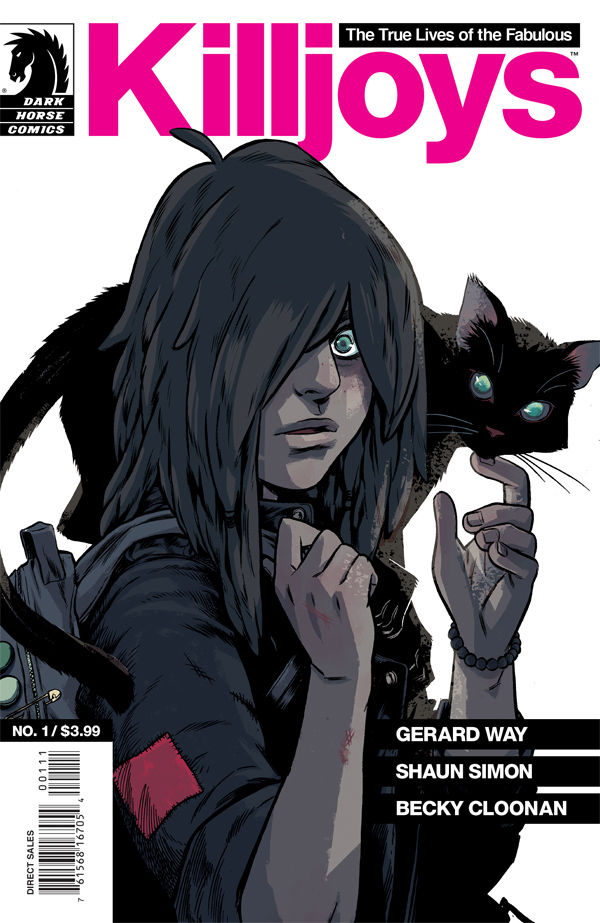
The True Lives of the Fabulous Killjoys #1
Alright, bear with me as I attempt to decipher the plot here. Ahem...

It's the future again. There's a city. It's called Battery City. It's one of those huge-ass metropolis's run by corrupt corporations you'd find in any good cyberpunk. Outside of Bat City is the Desert, a lawless frontier where people labeled undesirable by Better Living Industries exist. Some time ago, there was a group of rebels called the Killjoys, who tried to revolt against BLI and all died, except for the Girl, a six-year-old who was expected to do something important someday maybe. Some time later and the Girl is now a teenager and falls in with a new group of rebels, who are less interested in revolution and more interested in protecting themselves from BLI's scarecrows (Don't know what those are), as well as the Draculoids, a roaming group of marauders/cultists who can indoctrinate people into murder frenzies by making them put on creepy masks. There's also a subplot that takes place in the slums of Bat City about a drug-addict lesbian android hooker.

WHAT THE CUSS DID I JUST READ?!

Really, the reason I bought this was that last name at the bottom of the cover. Becky Cloonan is an artist who hasn't worked much in the industry, but when she does, she produces some fantastic work. If you want more proof, go read Batman Annual #1 or Swamp Thing #0. And while I had no idea what was going on in this book, it at least looked really unique and really good. I'll keep following this, mostly to get more Cloonan artwork, and partially to see if I can decipher what the hell is going on here.

**EDIT: I just found out that this series is an apparent follow-up to Danger Days, an album/story by Killjoy's writer, My Chemical Romance frontman Gerard Way. I did not know this, the comic did not make it clear. Maybe I'll actually listen to it and get the plot. Maybe I'll read the Wikipedia summary instead. Who knows (probably the second one, though).

Thanks for reading everybody and I'll see you next time!

Tuesday, April 9, 2013

Infinite Raptures


SPOILERS FOR BIOSHOCK 1 AND INFINITE AND MAYBE BIOSHOCK 2 ALSO. YE HAVE BEEN WARNED

A few weeks ago, 2K Games once again showed everyone how it's done with their FPS game Bioshock Infinite. Now I'm of a mind that the original Bioshock has the best story in video games, partially because it was a fascinating exploration of a philosophical ideal made flesh via a new and unique setting and partially because it uses the medium it's in to move the story forward (seriously, the second act plot twist of Bioshock could ONLY be as effective as it was in a video game). Infinite doesn't quite come eye-to-eye with its predecessor, but it makes a very noble effort of it and still comes out with a great story and characters while maintaining solid FPS gameplay and making sure the floating city of Columbia was just as interesting and frightening as the underwater city of Rapture.

Infinite's ending has received a lot of attention. I've come across several articles and videos explaining how the timeline balances out, how Booker and Comstock and Anna and Elizabeth and the Luteces all fit in with one another in this crazy time-travel/alternate reality narrative. This article will not be one of those; you can find rundowns of the ending on YouTube or most gaming websites and you can just go ahead and watch the ending here:

No, rather this article will be about a few thoughts I've had on Infinite, about its ending, the story as a whole, and how it relates to the other games (though mostly just the first one since it's apparently general policy to pretend Bioshock 2 never happened). With all that said, lets get to my opinions, because they matter, apparently.

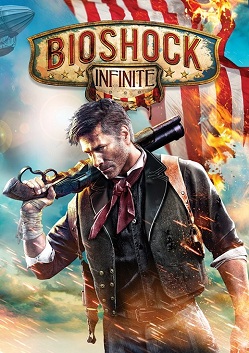
1) This cover art is bullshit.
Now don't get me wrong, I'm not saying this is bad cover art. It looks quite nice and epic, showing off our hero, Booker DeWitt, being all badass and whatnot. The artist who put this together should feel very proud of themselves. But do you notice something missing from the artwork? Some person that should be there but isn't for reasons that are deeply depressing?

WHERE. IS. ELIZABETH?

You may not know it by looking, but Elizabeth is the focus of the entire game (except maybe in the last ten minutes, but that's just cause her character arc is complete and she is now acting as a guide to Booker so he can have a last-minute arc). Her attempted exodus from Columbia is the point of the game. It's Booker's mission to free her, it's Comstock's mission to groom her to be his successor, it's Daisy Fitzroy's mission to figure out what she is and how she can be used...and yet she doesn't get to be on the cover? That's some BS.

Now creative director Ken Levine has defended the choice, saying that in focus testing, this was the image that got the best response and the developers figured it would sell the most units. There's nothing inherently wrong with that; 2K and Irrational Games put together a product and they want to sell as much of it as they can, they want to get their work out to as many people as possible. That's all well and good. The problem here is the creeping undercurrent of sexism; that you can't sell an action game with a girl on the cover.

I'm not saying all gamers are sexist or that nobody will buy a game with a woman on the front cover. What I am saying is that a lot of video games have...'issues' with women, a fact that a rather vocal collection of gamers insists is a rumor perpetrated by the feminazis to take away their toys. Here in Infinite we see some great female characters, not only with Elizabeth (in spite of her initial damsel-in-distress status), but with Daisy Fitzroy and Rosalind Lutece, but the box art only plays up the manly man of Booker DeWitt and his manly shotgun. The only thing the developers really did wrong here was play into a culture that has some problems in it. I'm not mad, I'm just kinda disappointed that this utterly generic and ultimately misleading image is the best way to sell a game.

2) On the subject of Songbird
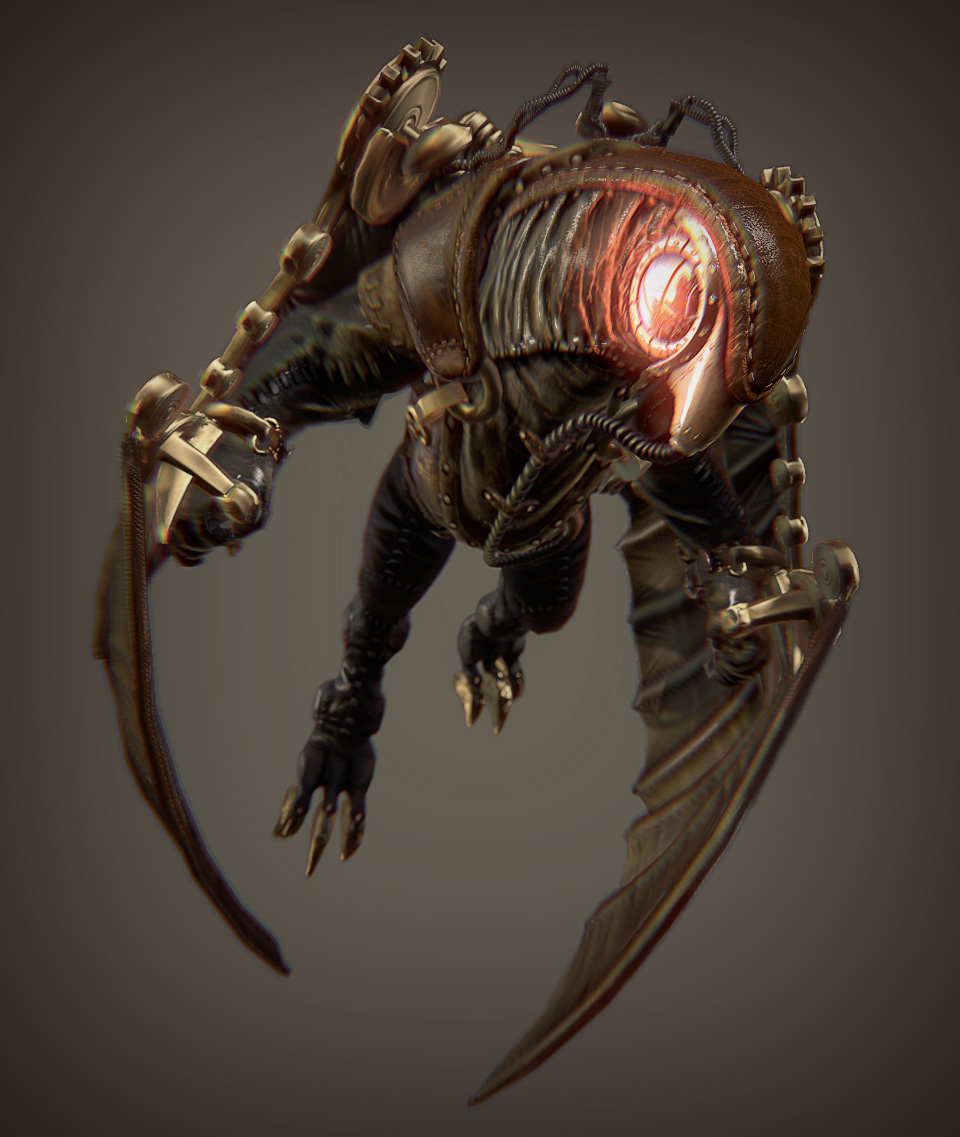
I love Songbird. I really do. Despite technically predating them by fifty years, Songbird is the next stage in evolution from Bioshock's Big Daddies; a partially human, mostly machine creature whose single-minded purpose is to protect his charge, a purpose he adheres to with admirable gusto. Plus he's got a really cool design. Being the big bad dragon to Comstock's evil (but frail and human) king, you'd then expect Songbird to be the final boss of the game. I know I did. But Infinite's smarter than that, and Songbird's demise ends up being one of the more poetic deaths I've ever seen.

After learning to control the bird through musical cues, Booker orders him to destroy the Siphon, a machine that limited Elizabeth's reality-traversing powers. The destruction of the Siphon does unlock Elizabeth's full potential, but also destroy's the music machine that's controlling Songbird. He returns to his original mission of killing Booker and reclaiming Elizabeth. It's then that Elizabeth, now with complete mastery over her powers, calmly sends the three of them to a city underwater (more on that in a bit)...but leaves Songbird outside in the water. The depths of the ocean and the underwater pressure crush the bird, and in his final moments, he shares a quiet goodbye to the charge he loved and protected so much, before his lights go out and he meets his end.

The real poetry of it lies in the fact that it's Elizabeth, not Booker, who kills Songbird. With the Siphon destroyed, she's mastered her powers. She knows all, sees all, and can go anywhere or anywhen she pleases. She's rejected Comstock's ideology and liberated herself from Columbia. She powerful and independent enough that she doesn't need Songbird anymore, and so removes him from the equation. This event marks the completion of her character arc.

There's also the symmetry of Songbird dying underwater and several other characters doing that, but more on that in a bit.

3) Anna DeWitt is Andrew Ryan's mother

Well, maybe not exactly that, but they could be related. This is more of a fan-wank theory than anything, but bear with me here.

Okay, so real quick ending rundown: Elizabeth is revealed to be Anna DeWitt, Booker's daughter whom he sold as an infant to Comstock in order to pay off his debts and ensure that his daughter had a better life than he could provide. However, he had a change of heart and tried to take the girl back shortly before Comstock and the Luteces returned to their own reality (BTW, they were from a different reality. More on that in a bit). As the portal between worlds closes before Booker's eyes, baby Anna reaches out to him, and the portal closes on her hand, severing the pinkie-finger on her right hand. This is their explanation for Elizabeth's powers: because a piece of her is in another world, she can traverse worlds. Makes as much sense as anything else in the franchise. Anyway...

Remember how Songbird died outside of an underwater city? Well, it wasn't Atlantis. It was Rapture, the same city from the first two Bioshock games. Now Booker and Elizabeth/Anna arrive in Rapture presumably during or after the events of the first game. This is believed to be so partially because the welcome center is free of any splicers (I guess Jack already cleared them out), partially because there's a rumor that you can hear Songbird's screams as he dies during a portion of the game, but mostly because the duo pass a sign telling them that the bathyspheres that serve as transportation between the undersea towers are out of service, meaning that Andrew Ryan's lockdown is in effect. And yet the pair hop in the first bathysphere and take back to the surface, to the first lighthouse, and begin their walkabout through reality.

People who played the first game will recall that the bathyspheres were only usable by Ryan himself or by people with similar DNA. This is why Jack could use them; he was secretly (SPOILER ALERT) Andrew Ryan's illegitimate son, artificially aged and manipulated by Frank Fontaine to bring Ryan down. By this logic, the DeWitts can use the bathyspheres because they have similar DNA to Ryan. I originally assumed this was because Anna DeWitt, in a different timeline, grew up, got married and had a kid who would eventually build a city at the bottom of the ocean; however, further research revealed that Andrew Ryan actually had a backstory, involving being born in Russia, witnessing the revolution and having it shape his beliefs, and then changing his name and emigrating to America, all of which makes the possibility of Anna DeWitt being his mother seem unlikely. However, there's still the fact that the DeWitts could use the bathyspheres, so they're related to Ryan somehow. I just don't know how yet.

Or maybe Booker and Elizabeth arrived after Jack's adventure in Bioshock and he left the spheres unlocked when he left Rapture. Who knows?

4) Booker DeWitt can see THE FUTURE!

Plot twist number two for Infinite was that our hero Booker DeWitt and our villain Zachary Hale Comstock were in fact the same person. The explanation given is this: Booker, in his younger days, was a bit of a white supremacist, and when he was accused of having a family tree that 'sheltered a teepee or two', he decided to prove his fellow soldiers wrong by burning a few teepees during the Wounded Knee Massacre. Afterwards, he was wracked with guilt over his violent actions and tried everything to alleviate his guilt, including attending a baptism that would cleanse him of his sins. Booker found he was unable to go through with it, as how could a dip in the water really wash all the blood from his hands? He left the ceremony and began a life of drinking and gambling and also fatherhood somewhere in there. But what if Booker had accepted the baptism? What then?

In another reality, Booker DeWitt went under the water and Zachary Hale Comstock came out. Comstock went on to try and share his vision of the world, his violence and white supremacist beliefs no longer held back by his own guilt. He met Rosalind Lutece, she built a device that could see into the future, they made Columbia, Comstock went sterile, he bought Anna DeWitt, and the rest is very confusing history.

Now Comstock's prophetic visions are attributed to Lutece's machine, that it showed him probable futures and he used them to guide his followers. However, Comstock had a vision before he met Lutece; namely the original vision of the angel Columbia showing him the city above the clouds, the new Eden that would someday lay waste to the Sodom below, for what was the city of Columbia if not another ark for another time and all that. No explanation has been given for who the angel really was and how Comstock saw his city before it was created. This kinda bugged me until I remembered something: Booker DeWitt has a vision too.

Early in the game, Booker has flashback/dream, wherein he opens the door to his office and sees the city of Columbia now below the clouds, raining fire and destruction upon a New York City that is much more modern than it is in the year 1912. This vision comes to pass in a future where Elizabeth accepted Comstock's influence and became his heir and thus the seed of the prophet sat the throne and laid waste the mountains of man and blah blah blah. The point is, Booker and Comstock both saw the future. That says to me that Booker just has that power sometimes. Why? To move the plot forward and to build tension.

It's not a good explanation, but it's an explanation.

5) The Luteces have done this before

Rosalind and Robert Lutece (supposedly twin siblings but actually they're the same person from two different realities and of two different genders) are one of the best parts of the game, an enigmatic pair who help guide Booker on his journey while acting cryptic and weird and actually pretty entertaining, for what little time they have onscreen. Anyway, plot twist number three is that Robert Lutece not only got Booker to sell him Anna, but convinced him to bring her back (presumably because Robert saw what Elizabeth would become under Comstock's guidance and wanted to put a stop to it before she burned America down). Little dialogue choices and actions they take imply that this is not the first time they've sent a Booker DeWitt to Columbia to rescue Elizabeth. The bloody corpse you find in the lighthouse? Possibly an earlier Booker who was killed by the lighthouse keeper? Or just the lighthouse keeper himself whom the Lutece's had to snuff out in order for Booker to proceed? We'll probably never know but it's an interesting thought nonetheless.

6) The Columbians aren't as interesting as the Rapturers

This is one of the places where Infinite falls short of the original Bioshock; the people you meet in Columbia just aren't as good villains as the ones in Rapture. Cornelius Slate is an interesting counterpoint to both the Founders and the Vox Populi, and Daisy Fitzroy is interesting if you've read the expanded material, but other than that they all fall short. We never learn much of Lady Comstock, Jeremiah Fink doesn't do much except be a racist businessman, and...well that's sort of it as far as named characters go. Compare that Bioshock's characters; people like Dr. J.S. Steinman, Peach Wilkins, Brigid Tenenbaum, or Sander Cohen. Those were some interesting faces who really helped flesh out Rapture and make it such an engaging location. Now granted, this is because game one and Infinite had different focuses; in Bioshock, Jack didn't have much personality...or any personality...but that's okay because everyone else in Rapture was just so larger than life. Comparatively, Infinite focuses squarely on Booker and Elizabeth, and because of this, they're the ones that get fleshed out, not as much the world around them. Still, it would've been nice to see the Vox Populi be more interesting, as they're touted as being a major part of the story and then sort of fall flat by the end.

So, those are my thoughts on Infinite and it's place in the general Bioshock pantheon. If you have anything to add or detract, post it somewhere in the comments. Thanks for reading, and would you kindly join me next time?

Thursday, March 14, 2013

In Defense of Andrea


***HERE THERE BE SPOILERS. YE HAVE BEEN WARNED.***

As will surprise absolutely no one, I love AMC's The Walking Dead. I love the writing, direction, acting, characters, action, and overall design. I love that it's become a ratings juggernaut. I love that an indy comic is getting so much attention. I like that the showrunners are treating the comic as an integral part of the show. I love that series creator Robert Kirkman is such a visible part of both aspects, to the point where he was on Conan (and actually did pretty well). I love The Walking Dead. But you know what I don't love? I don't love how much hatred there seems to be for certain characters in the show; particularly Lori Grimes and Andrea.

I'm not gonna cry sexism here (though I'm tempted to) since I don't know enough about that subject to get into. However, I will say that the hate seems to be a bit unwarranted. Let's start by looking at Lori, since the hate for her seems to have died when she did. To be honest, I never really got the hate for her. I've heard it said that she seemed to get in the way of the plot...which is kinda BS, since her presence was central to several plots of Season 2, including the escalating conflict between Rick and Shane and Carl's ongoing journey towards complete sociopathy. I also get the feeling that she is seen as an unfit mother considering the amount of times her son is told to "get in the house" and never does (yeah, apparently that was a meme during Season 2. I don't keep up with memes and it's too late to care, so fuck it). Maybe it's that some viewers didn't like the idea of a woman sleeping with someone after her learning that her husband was dead (which, why wouldn't he be, except in the case of the unlikely circumstances which lead Rick to not being dead).

However, I think the final nail in the coffin was the season finale, when Lori reacted with shock and horror at learning that Rick actually went through with it and killed Shane, after she warned Rick that Shane was dangerous and that he should do something about it. This I will defend. I have to assume she meant "Rick, talk to him and get him to back off," which Rick tried, and which failed, and led to the predicament of Shane getting knifed. The killing, however, she didn't expect; hell, most of the viewing audience didn't expect. And to hear that her husband killed a man and does not regret it? That's probably a lot to take in, so I can see why she wouldn't be immediately okay with that course of events. However, Lori died some episodes back and now the fans have a new female main to dislike for various reasons that are probably stupid: Andrea.

Looking back on it, I actually like Andrea's development since season one, starting as the gentle bystander, pushed to a suicide attempt by the death of her sister, resenting the man who 'rescued' her, stepping up and becoming an effective member of the walker defense team, having a brief affair with Shane, seeing Dale die, getting separated from the group, teaming with Michonne for eight months, finding Woodbury, sleeping with the Governor, watching Michonne leave, finding out that the Governor's kind of a psycho, finding out the Governor's really a psycho, finding that her old group plus Michonne are starting to fall apart at the seams and that they're now at war with the Governor (who has superior numbers and a more fortified position), and now trying to make peace between these two camps. That's a lot to do in three seasons.

Now, the hatred for Andrea seems to come from the fact that she's sticking with the Governor, willfully ignorant of or apathetic towards the fact that he wants to kill all her friends and also kept a secret collection of zombie heads in fish tanks. This is not how I see it. She isn't sticking with the Gov, she's sticking with Woodbury, and all the people who live there. She wants to see these (presumably) nice, innocent people not die just because their leader is an asshole. And she knows their leader is an asshole, she said as much in the last episode! But she also knows that Woodbury believes in him and supports him, and that they will follow him into a war with Team Rick that will get a whole lotta people dead. Andrea doesn't want that and is trying to make peace with the two camps.

Now I know what you're gonna say - or rather not say, since nobody posts here and my meager handful of followers don't watch the Dead and have no opinions on it - you're gonna not say "But Andrea slept with the Governor, even after she found out what happened with Glenn and Maggie and Merle!" Well, to that I say...yes, yes she did. But not because she wanted to get some; she was trying to go through with Carol's brilliant plan of "Bang him, then kill him in his sleep". She got the first half done, but the second...well, I imagine it's heard to stab a man that you once really liked through the heart while he's sleeping. Just a guess. Call it weak, I call it human and, more to the point, I call it Andrea trying to keep Dale's morals alive in a world where he's not there to interject into conversations.

If there's any flaws in Andrea's machinations it's that A) she's trying to get Rick and the Gov to make peace, despite the fact that this will never happen because both are ruthless SOB's who are currently setting up timeshares in Crazytown (to say nothing of the fact that this is a TV show and everybody wants an explosive climax over tedious delegations), but more to the point it's that the outcome of Andrea's plan leaves the Governor in power at Woodbury. Ideally, the Gov wouldn't hurt anyone now that he's not at war with Rick, but this guy is too unstable to be left alone, much less be leader of a town and have access to a relatively huge arsenal. The audience knows it, Rick's group knows it, and Andrea really should know it.

I get the feeling that Andrea's going to be the one to eventually put the Governor down, if only so that the writers can redeem her in the eyes of the fans, but for now, I'm liking watching her journey. Optimism from someone who was once suicidal is an interesting shift, but for Andrea it makes sense and it brings a perspective that's otherwise missing from an overwhelmingly bleak and grim show. I like the character, I like the storyline, and, like many of you, I'm on the edge of my seat every Sunday, waiting to see where things go.

Sunday, March 10, 2013

Not in Kansas Anymore


I haven't written a movie review in some time (and haven't seen a movie on opening weekend either), so indulge me.

For many people (myself included), 1939's The Wizard of Oz is a staple of our childhood, an iconic fantasy film that has lasted well through the decades and sparked the imaginations of many a viewer. The Land of Oz is as mystifying and engaging as a fantasy land born of a sixteen-year-old's angst-ridden fever dream can be, and has inspired several sequels, prequels, spin-offs, and expanded universe materials. The latest, Oz the Great and Powerful is another one of these, and it's a pretty damn good one.

Focusing on the Wonderful Wizard makes a lot of sense. Despite being the title character of the classic film and the first of L. Frank Baum's novels, we know relatively little of him, but he leaves a huge impression. He's the original man behind the curtain, an enigmatic ruler whose power doesn't begin match his reputation. To whit, our story follows the origin of Oz himself, real name Oscar Zoroaster Phadrig Isaac Norman Henkel Emmannuel Ambroise Digg (played by James Franco), a stage magician, con artist, and womanizer operating out of a traveling circus in black-and-white Kansas. A poorly-timed balloon ride and one tornado later, Oscar lands in the Merry Old Land of Oz faster than you (or any one else in the cast) can say "It's a twister! A twister!". Oscar is immediately heralded as the prophesied savior of the land, and being the opportunistic sod that he is, Oscar takes advantage of the situation and accepts his role, unaware that his welcomers may really be pulling the wool over his eyes.

The film is directed by Sam Raimi, a geek icon who A) has a lot of reverence for older material, and B) knows how to bring the fun to his flicks, making him pretty much perfect for this film. The peril is exciting, the action engaging, and the characters are pretty fun. Franco sells the more human aspects of Oscar, though it took a bit for me to buy into his showman persona, while his traveling companions are entertaining and complement Oscar well. What's more, the film has the right amount of reverence for it's predecessor, showing off iconic images and familiar moments, without being distracting about it. The visuals are stunning, with Oz being the same larger-than-life fantasy realm that it must have been for 1939 audiences. However, the best thing onscreen ends up being the film's leading ladies.

The three witches of Oz (which sort of confuses me, as the witches are based on directions on the compass so logically there should be four, but whatever, three's more Shakespearean or whatever), played by Mila Kunis, Rachel Weisz, and Michelle Williams, look goddamn spectacular onscreen, which is to say nothing of the characters they play. The witches are more nuanced than expected, particularly Kunis and Williams, and make for some of the most interesting (and gorgeous) parts of the movie.

If I had to criticize Oz, it's that it suffers from the same affliction many fantasy stories like it suffer: very simple characterization. The supporting cast is fun, but there's not much to them, and only two or three of them have an actual arc. Hell, I don't remember much from two of Oscar's companions except their job title and the actors who played them. Also, while I won't spoil the second act twist, the movie telegraphs pretty hard where certain characters will end up in the grand scheme of Oz iconography. And finally, Oscar's arc comes off as...well, utterly expected. It's the same lesson learned in Wizard (no, not that one), so I guess its got that going for it, but it's still fairly obvious.

In a time when revisionist fantasy is in, when everything magic on film has to be dark or subversive to relate to the young people, Oz comes off as almost a film unstuck from time; a flashy, optimistic piece that also serves as a loving tribute to one of the oldest and most well-recognized films in the genre. It's an absolute blast of a blockbluster, and comes highly recommended.

Besides, what else is playing right now?

Sunday, February 24, 2013

Seven Strangers


Okay, I just read this weirdness and I had to talk about it. And I've got a lot to say about it, but bear with me.

First off, some history on the Silver Age of comics; specifically, what is the Silver Age of comics? Dating roughly from the late 40's to the late 60's, the Silver Age was partly defined by the activities of Dr. Frederic Wertham (the great asshole). A psychologist interested searching for the root cause of juvenile delinquency, Dr. Wertham (the great asshole) found that most, if not all, inmates at juvenile halls stated they had read comics at some point - which was kind of obvious, since comics were big during that time. It would be like asking today's kids if they had a Facebook account or watched YouTube. Nevertheless, a link was found, and Dr. Wertham (the great asshole) began crusading against comics, including those published by DC. The response was the creation of the Comics Code Authority, a set of rules created by comic publishers that would ensure censorship in their books. The removal of sexuality, drug use, and frightening images made the medium aggressively kid-oriented; i.e., more focused on the weird ideas than characters. This would change with Stan Lee and the Marvel revolution in 1962, but the early Silver Age would remain one of the strangest eras of storytelling in American comic books.

What does this have to do with anything? Well, some of those kids who read and loved the weirdness of the Silver Age that was largely swept under the rug as time went on grew up to become comic writers themselves. One such was Grant Morrison, who doesn't have a nickname so I'll just call him the Great Scottish Wonder. Morrison regularly incorporates Silver Age nostalgia into his stories, but reinvents them, infusing his own brand of strangeness and contextualizing them into the modern era. One such was 2005's meta-series, Seven Soldiers, which I just read and am pretty sure I liked it.

A reinvention of the Golden Age team the Seven Soldiers of Victory, Morrison's meta-series was made up of seven different miniseries, each one focusing on a member of the team, book-ended by single issues that opened and closed the story. The through-line of the stories was relatively simple for Morrison: aliens from the future called the Sheeda are preparing to attack Earth in the present, and each of our seven heroes has some encounter with them that puts them on the path to fighting back when the climactic invasion happens. Sort of. It's complicated, but in a clever way. The weirdness of it comes from the specific characters stories, which I will explain to you, because hey, that's what I'm here for:

Shining Knight (art by Simone Bianchi): The Silver Age Shining Knight was Sir Justin, a knight from King Arthur's court, displaced from time into the future who went on to be a superhero. The new version is a bit more interesting. He's still a Sir Justin of Camelot, but a more Celtic Camelot than the Medieval version we're familiar. See, according to Morrison, Camelot exists in cycles; if one is destroyed, it's only a matter of time (in this case, some 8000-odd years) before another comes up. And yes, Celtic Camelot does get destroyed by, who else, the Sheeda. Sir Justin (or Sir Ystin, as it were), escapes by invading the Sheeda's floating fortress, Castle Revolving, and winds up thrown through time into the future, where he deals with the loss of everyone he knew and loved, but resolves to continue fighting the Sheeda nonetheless.

It's not the most original story, but it's still well done and has an interesting subplot (involving a magical, life-renewing cauldron falling into the hands of a Los Angeles crime boss) that winds up tying into the rest of the series. Plus there's a hell of a character revelation about Ystin in issue 3. Really a great way to kick off the event.

Manhattan Guardian (art by Cameron Stewart): This was probably my favorite of the minis, as it balanced the strangeness with a good character focus. Our protagonist is Jake Jordan, a former Cinderella City cop (don't worry, it's just New York). Jake, despondent over the circumstances of losing his job, accepts a new position as a reporter and superhero, employed by a major metropolitan newspaper (think of it like if the Daily Planet paid Superman for saving the city, as well as Clark Kent for writing about it). From there, Jake fights the Subway Pirates of Manhattan (you have to read it to believe it), as well as learns about his boss's history with the kid supergroup, the Newsboy Army of Nowhere Street. It's strange, but doesn't distract from Jake's personal heroes journey and introduces characters who pop up later in the series. Plus, Subway Pirates of Manhattan. You gotta love those freaks.

Zatanna (art by Ryan Sook): This was probably my least favorite of the minis, as I just wasn't interested in the story, which is a shame because I like the hero. Zatanna Zatara is easily the most famous character here, a stage magician who moonlights as a genuine sorceress, who has been a member of the Justice League for some time. Here, her story involves Zatanna going through a "magic addiction", in which she begins relying on using magic to solve everyday problems, which leads to her misusing her powers and endangering herself and others (really it's a confidence issue, as it relates to the circumstances of the previous story Identity Crisis, but whatever). She takes a break from using magic, but decides to take on an apprentice, teenage sorceress Misty Kilgore. From there, things...happen, I think. I dunno, I feel like I might've missed a lot of the story on the first readthrough (including Misty's entire backstory, which figures in heavily with the Sheeda and has something of an impact at the end of the story). Still, the art was trippy and cool and the story eventually crosses over into others in a neat way.

Klarion the Witch Boy (art by Frazier Irving): Klarion's...an interesting one; a complete, top-to-bottom reinvention of an old character. The original Witch Boy was a Jack Kirby-created villain, an adolescent sorcerer whose unchecked id caused problems for Etrigan the Demon and occasionally other DC heroes. The new Klarion is more heroic (at least at first); a citizen of Limbo Town, a lost tribe of Puritans living underneath New York who maintain 17th-century styles and traditions, save for their worship of the witch-god Croatoan. Klarion, like little mermaids before him, is fascinated from afar by the wonders above ground and seeks to explore the outside world. However, the strict laws of his home prevent him from going to the surface. He gets his opportunity when the Sheeda begin to invade Limbo Town, and the chaos allows Klarion to escape and begin his exploration.

This series is mixed for me; Morrison's problems in storytelling rears its head when off-screen events don't get a proper explanation, but the high points of the series are very high points; I especially like the poignancy of Klarion's wide-eyed amazement at seeing something as common and pedestrian as a candy bar wrapper. Frazier Irving's moody, expressive style adds an element of creepiness to the book, which actually works really well and makes Limbo Town seem safe and familiar when compared to the outside world.

Mister Miracle (art by Pascal Ferry): The original Mister Miracle was escape artist and superhero Thaddeus Brown, who eventually died and passed the mantle onto someone else: alien who looks like a white guy Scott Free (yes, that's his name, and there's a reason for it). Scott's part of the Fourth World, a pair of planets constantly at war with each other: New Genesis and Apokolips (guess which one's the bad guys). Our third Miracle and the star of the series is Shilo Norman, Thaddeus Brown's assistant who uses Scott Free's technology in his escape artist act. During his latest stunt - escaping from the event horizon of a black hole - Shilo meets Metron of New Genesis, a character whose entire purpose is to pop in, say "Crap's about to go down", then leave. From there, Shilo learns that the war of the Fourth World ended, and evil won. Darkseid, the tyrannical ruler of Apokolips, found the Anti-Life Equation and turned all the Fourth Worlders into humans, with the heroes of New Genesis as a group of homeless people and the warriors of Apokolips as a crime syndicate. Shilo is instructed to become the spirit of freedom his predecessor was, but soon finds himself caught up in the machinations of Boss Dark Side and his forces.

As a series Miracle, is only tangentially related to the overall Sheeda-invasion. Really, it's about Shilo coming to term with the idea of being involved in an ages-old intergalactic war that's come to Earth, but this feels incongruous, since superheroes are well established by now in the Earth of DC and their weirdness is sort of mundane by now, but beyond that arbitrary skepticism, the story comes off as kind of uninteresting. The idea of the Fourth World on Earth turns out to be pretty cool, but Shilo Norman himself is a bit bland. Still, it's very atmospheric and creepy, and has some cool ideas to it.

Bulleteer (art by Yanick Paquette): The original Bulletman and Bulletgirl were a husband-and-wife superhero team from WW2, first published by Fawcett Comics in the Golden Age. The new Bulleteer is a soap box for Grant Morrison to cry foul at the objectification of female superheroes...while simultaneously drawing its protagonist as sexy in every panel she's in. It's weird.

Lance Harrower is a scientist working on creating "smart skin", a chemical process which would make the user invulnerable and super-strong. His wife Alix, being a rational human being, thinks it would have good military applications, but Lance wants to become a superhero, as, in his mind, superheroes stay young and beautiful forever (he's not completely wrong, but still). Lance tests smart skin on himself (as you do), and passes the power to Alix. Lance dies, but Alix survives, with a batch of superpowers and a fresh coat of metallic skin to boot. Since she can't go back to her old job looking like a robot, Alix decides to go into superheroing for profit, adopting her late husband's costume design and becoming Bulleteer, superpowered bodyguard. Also, eventually there's superhero porn involved.

Bulleteer ends up being one of the better stories. Alix is a compelling character and her story is tragic and human. The artwork is really strong, and a lot of the side characters are interesting, especially once we get to the superhero convention. Despite the confusion of its message, Bulleteer is a strong character piece and a lot of fun to read.

Frankenstein (art by Doug Mahnke): Our hero Frankenstein (it's the creature but he named himself after his creator) has devoted his non-life to the destruction of the Sheeda, and will travel to the ends of the Earth and beyond to accomplish this goal, all the while waxing poetically and chopping people up with his big-ass sword. He also gets help from his former Bride and the Super-Human Advanced Defense Executive (or S.H.A.D.E., DC's answer to S.H.I.E.L.D.). And...that's about it. Frank finds some Sheeda activity on Earth, goes to it, kicks some ass while monologuing, leaves, then does the same thing for three more issues. And it works.

A big help here is Mahnke's artwork. His ultra-detailed style brings the gruesome horror up a notch, which works when your main character's a corpse. The writing, however, can get wearying; a lot of the Sheeda's weirder ideas like Nebula Man, the Red Place, or the maggots get very wordy explanations for what they are and what they do, and Frank's monologues sometimes feel redundant. Still, the unstoppable badass of Frankenstein shines through, and makes this series worth remembering.

So that was Seven Soldiers, a strange journey to the heart of things Grant Morrison thinks are cool. There's some hits and some misses, but overall its a fun batch of characters with unique stories and a lot of great artwork to boot. Check it out if you get the chance, but maybe bring a cheat-sheet. Thanks for reading and I'll see you next time!

Monday, December 17, 2012

Top Ten Most Anticipated Movies of 2013

Well, 2012 is coming to an end, and assuming the world doesn't end this coming Friday, 2013 has more than a few releases I'm looking forward to, and since there are still three movies coming out for me to see before I make my "Best Of" list, I might as well do my most anticipated of next year. So, without further explanation needed (I think), here's my most anticipated films of next year:


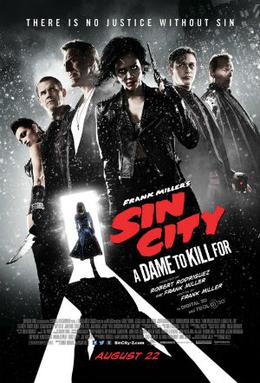
Honorable Mention: Sin City; A Dame to Kill For

One of my many, many weird habits is that I don't believe a movie exists until it's being sold to me; i.e. until I see a trailer. No trailer has been released for the long-awaited sequel to 2005's Sin City, and compounded with the fact that this movie's been in the works for eight years, plus the fact that some of the principle roles have yet to be cast, I'm not getting my hopes up too soon. Still, according to the ever-reliable news sources of Wikipedia and IMDb, A Dame to Kill For is coming to theaters next October, and even with the ever-controversial Frank Miller lending a crazy hand to the proceedings, Robert Rodriguez is back to making movies for grown-ups. That alone is worth getting excited about.


10) Jack the Giant Slayer

Another of the suddenly popular 'revisionist fantasy' genre, this is one that's been stuck in development for some time, having intended to be released in February 2011 and now coming in March 2013, reportedly so that Warner Bros can perfect the film's visual effects. Development hell doesn't bode well for any picture, but this one still gets my interest because of four words: Directed by Bryan Singer. Say what you will about his disappointing Superman Returns; he's had a hand in all of the good X-Men movies and he's proven himself as a great director of action and character beats. That alone has me interested.

No Poster
Available

9) End of the World

Okay, this is sort of weird since I just said I don't believe a movie exists until it's being sold to me a mere two entries ago, but the premise of this one is a killer. In End of the World, we see the apocalypse from the point of view of Hollywood's most available. A party with James Franco, Seth Rogen, Jay Baruchel, Jonah Hill, Michael Cera, Craig Robinson, Emma Watson, Rihanna, and others is interrupted when the end times come. You can't put that many funny people and also Rihanna in one movie and not expect to get some laughs. Until the trailer hits, settle for the fake trailer that inspired the real movie.


8) Man of Steel

Here's the short version: Marvel has won the movie race. They're not winning right now and DC just needs to catch up; the race is over and they've won. The Avengers came out, a movie that teams a space god, a dude in a robot suit, and a man whose entire character can be summed up as "good guy", while DC Entertainment is struggling to get their Amazon princess flick off the ground. Marvel went for the silly crap and came out ahead for it. DC's trying to make their characters relevant and modern and edgy, and that's handicapping them and keeping them from making Avengers-level money. Until they can figure out how to do someone besides Batman in movies, they're always gonna be lagging behind the House of Ideas.

That's why I'm apprehensive about Man of Steel. Yes, I'm gonna see it, I'm just worried it's gonna reach for being The Dark Knight but just end up as another Superman Returns, or (god forbid) a Green Lantern. Bottom line is that I'm apprehensive, but eager to see the results. Plus they got Zack Snyder directing it. Say what you will about Sucker Punch or 300; at the very least, the dude knows how to make things look good on film, and hopefully, the story will be good enough to match Snyder's visuals. So who knows? Might be the first step in DC expanding it's film base and making their proposed Justice League movie happen in 2015.


7) Star Trek into Darkness

J.J. Abrams first Trek movie was flawed, but ultimately a really fun ride that showed a lot of respect for the old show. In addition to having the dumbest film name in the franchise, the sequel hopes to do the same as the first and improve upon it by making TV's Sherlock Benedict Cumberbatch the main villain. I can think of few ways of improving a movie than adding Benedict Cumberbatch to the cast. Couple that with all of the stuff that made the first movie good and you've got a sequel I really want to see.


6) Oz, the Great and Powerful

I feel like it's 2001 again, and cult-favorite director Sam Raimi is showing the world how to make a blockbuster. After helping to elevate comic-book movie to it's current dominance with his Spider-Man trilogy, Raimi is now tackling L. Frank Baum's most famous books. Great and Powerful serves as a prequel to the more famous story already captured on film, telling the origin of the Wonderful Wizard as he first comes to the world-famous fantasy land. Visually, the movie borrows from both the classic film and Baum's vivid descriptions of the Land of Oz from his books, and if the trailer's any indication, the result will be bloody gorgeous. Great and Powerful looks like an absolute blast from a director who, above all else, knows how to have fun.


5) Iron Man 3

Marvel's first movie post-Avengers trades in regular director Jon Favreau for Shane Black, who previously directed the well-received crime film Kiss Kiss Bang Bang, also starring Robert Downey Jr. Here in Iron Man 3, it appears they'll be borrowing from Warren Ellis's story arc, Extremis, which I never read, but involves a techno-organic virus that changes how Tony Stark interfaces with his armor or some such comic-book pseudo-scientific BS. Whatever, THE MANDARIN IS IN THE TRAILER! The Mandarin, a character who I never thought we'd see on film because he's so firmly rooted in the Cold War, is not only in the film and played by Oscar-winner Ben Kingsley, but is put right there in the trailer. See, DC Entertainment and Warner Bros? THAT'S how you do a movie!


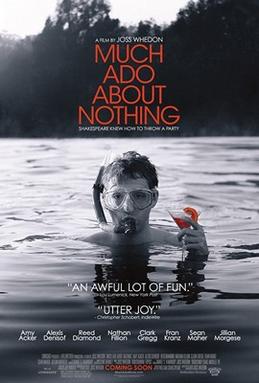
4) Much Ado About Nothing

Joss Whedon: So I've got a new movie...
Me: I'm in.
Joss Whedon: It's called Much Ado About Nothing...
Me: I'm in.
Joss Whedon: It's based on the Shakespearean comedy...
Me: I'm in.
Joss Whedon: It stars a bunch of my usual people...
Me: I'm in.
Joss Whedon: I filmed the whole thing at my house in black and white...
Me: I'm in.
Joss Whedon: And I also did the music for it.
Me: I'm in.
Joss Whedon: You wanna see it?
Me: ...I guess so.


3) Thor: The Dark World

Again, we have no trailer as this will be a November release, not a summer blockbuster. Still, I'd be jazzed about this one if they put it out on a Tuesday in September. Details on the exact plot of Thor 2 haven't been released yet, except that the villains have been cast, with 9th Doctor Christopher Eccleston playing the dark elf sorceror Malekith the Accursed, and actor whose name I can only enter through copy-pasting Adewale Akinnuoye-Agbaje as fellow dark elf Algrim the Strong, a.k.a. Kurse. Really though, the big seller for me is that it's a Thor movie. I loved the first one because it dove in headfirst with all its goofy Norse mythology and by the looks of things, they're doing the same with the sequel. Forsooth!


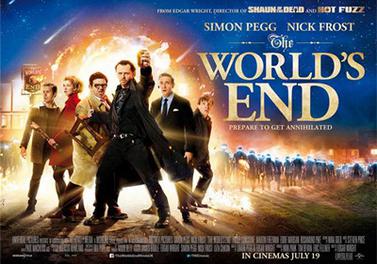
2) The World's End

So how does Edgar Wright follow-up directing my favorite movie of all time Scott Pilgrim vs. the World? By going back to the well, and re-teaming with Simon Pegg, Nick Frost, and the rest of the gang to complete their Three Flavours Cornetto trilogy with the comedy film The World's End (not to be confused with my #9 pick, the End of the World). The World's End is actually the name of a fictitious pub, one of many that the film's characters attempt to visit as they try to recreate a legendary pub crawl from their youth. However, things don't go as planned, the actual apocalypse may or may not be happening...look, I don't know the details. All I know is that Edgar Wright is making a movie, and therefore, I am obliged to see it. That's enough for me.


1) Pacific Rim

So Guillermo Del Toro made a movie that's a tribute to Japanese Kaiju stories, and it's about Godzilla-style giant monsters attacking the Earth and humanity fights them with giant humanoid robots that can punch them in the face and Idris Elba's in it and the ship's AI is voiced by Ellen McLain of Portal fame and OH MY GOD PUT THIS MOVIE IN FRONT OF MY EYES RIGHT NOW AAAAAAAAAARGH!!!

So that's my list. What are the movies you're most looking forward to next year? Post 'em, discuss 'em, but most importantly, see 'em. Thanks for reading and I'll see you next time!