Friday, January 9, 2015

Top 14 Characters of 2014

It's a new year, and with every new year comes a stream of "Best of" lists, recounting what people liked about the last year. I figure that I like writing about stuff I watched or read, so I'd throw my hat in the ring, since my opinion matters and all. However, rather than narrow my focus (or lack thereof, as it were) to one medium like movies or TV or comics, I thought it'd be fun to focus in on various characters I liked, using them as a way to discuss products and projects that meant a lot to me this past year. I also decided to order them alphabetically, rather go through the arbitrary process of ranking them from best to worst. So, without further adieu, here are my Top 14 Characters of 2014, starting with...

The Artisans
from Red Sonja

"They could have lived lives of endless surplus. They chose friendship, instead. I knew they were remarkable. I didn't know I would grow to love them."

I generally don't give a damn about Red Sonja. I never got into the works of Robert E. Howard and probably never will, and that's okay. I get the appeal of the character and have no doubt that interesting stories could be told with her, but there aren't many things that can going to get me to read a Red Sonja comic book.

Having Gail Simone write it is, however, one of those things.

The current Red Sonja series is a blast; a down-and-dirty, swords-and-sorcery title that's funny, endearing, and action-packed, and the series's second arc is a showcase for the best of it. When a dying pharaoh announces he plans to have one last party before he kicks the bucket, he commissions the She-Devil with a Sword to recruit the world's greatest cook, animal tamer, courtesan, swordsman, stargazer, and dancer as the entertainment for the grandest sendoff Hyrkania has ever seen.

The artisans, naturally, bring out sides of Sonja that we don't see often. There's comedy in her inability to relate to Gribaldi the cook, her pride is questioned in a duel against Osric the swordsman, and she finds common ground in the heretical astrologist Plaitius. However, the strongest story came from Aneka the courtesan, who brought out Sonja's more feminine side and had her questioning where she would be if circumstances hadn't forced her to become a warrior.

Simone has since said that this arc is one of the best she's ever written, and I'm inclined to agree. The Artisans are some of the most fun and offbeat characters I've seen in a fantasy story, and I sincerely hope we see more of them in the series.

Barry Allen
from The Flash

"My name is Barry Allen and I'm the fastest man alive. A friend recently gave me the idea for a new name and something tells me it's gonna catch on."

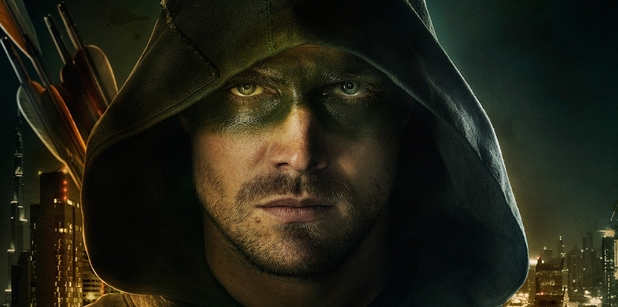
I've written about the CW's Arrow before on this blog, but here's the quickie recap: I like the show, I'm interested in the story, but it's kind of a mess; a melodramatic action program that takes itself way too seriously, even though it's about a Robin Hood cosplayer fighting masked mercenaries with his much more interesting sidekicks, cool black dude and sexy hacker.

Thank heavens, then, for The Flash, a light, upbeat, optimistic, and most importantly, FUN series. It's a show that acknowledges that the fastest man alive and his rogues gallery are inherently ridiculous, and decides to have fun with it without sacrificing the drama. And at the center of it all is the scarlet speedster himself, Barry Allen.

Unlike big brother Oliver Queen, Barry is lighthearted and relaxed, aware of the dangers and responsibilities of having powers, but still acknowledging how cool it is to be quicker than quick. Actor Grant Gustin plays Barry to perfection: he's shy, he's easygoing, and, of course, he's fun. Yes, his scenes with love interest Iris can be tiresome, but he's still the ecstatic everyman who holds the show together.

The Flash is the best superhero show on TV right now, and I'm very happy that it exists.


Earl Tubb
from Southern Bastards

Earl: That lightnin' hit that tree for a reason. Whatever happens next, I'm glad it did.
Esaw: What?
Earl: I said I'm gettin' mighty tired of whoopin' your ass, boy!

2014 was a real strong year for comics, or at least it was for independent publisher Image Comics. Creator-owned books like Sex Criminals, Saga, Pretty Deadly, Lazarus, Deadly Class, and some others that will show up later on the list all rode high, and among those fantastic titles was the chicken-fried crime drama from Jasons Aaron and Latour, Southern Bastards, and the main character of its first arc, Earl Tubb.

Earl is an unconventional type of hero: an over-the-hill ex-soldier who left small town Alabama forty years prior and never looked back. He returns home to settle a few affairs, but seeing how its been taken over by football coach and brutal criminal Euless Boss spurs Earl into taking action to save the soul of his town. His initial story ends in an unexpected way as we learn more about Earl's reason for leaving Craw County and what becomes of his challenge to Coach Boss.

While the writing from Aaron is what defines Earl and his conflicted feelings about his home, attention must be paid to Latour's design of the character. Earl looks like his face is carved from stone, but it's still plenty expressive, showing his intensity, his kindness, and more than anything, his weariness with his life and with Craw.

Earl Tubb's story is the story of Craw County, and I'm looking forward to where it goes next.

Monsieur Gustave H.
from The Grand Budapest Hotel

"You see, there are still faint glimmers of civilization left in this barbaric slaughterhouse that was once known as humanity. Indeed that's what we provide in our own modest, humble, insignificant... oh, fuck it."


The Grand Budapest Hotel may be my favorite film of the year, which is saying something in a year that featured Captain America: The Winter Soldier, The Lego Movie, and Gone Girl. Still, it's a quirky feature with a lot of comedy and a lot of heart, and holding it all together is the concierge of the titular hotel, Monsieur Gustave H.

M. Gustave is an odd sort, not only because of the immense pride he puts into maintaining the hotel, but in his every affectation. Gustave is always straight-laced and always mannered, creating an upper-class persona so precise that it has to be manufactured. It's in these moments, between the generous spritzes of perfume and the poetry readings during dinner, that we see who the concierge really is: a once-poor boy who now rubs elbows with the European aristocracy and HAS to act like it. That contrast is interesting enough, but he comes truly alive thanks to the wholehearted commitment and impeccable timing of actor Ralph Fiennes.

M. Gustave seemed to keep the Grand Budapest alive and running through expertise, professionalism, and sheer force of will. He was a clever chap and force to be reckoned with, and one of the best performances I saw this year.


Kamala Khan
from Ms. Marvel

"Why am I the only one who gets signed out of health class? Why do I have to bring pakoras to school for lunch? Why am I stuck with the weird holidays? Everybody else gets to be normal. Why can't I?

Marvel Comics has done interesting things with it's Marvel NOW! and All-New Marvel NOW! line of books. Classic characters have been reinvented in new ways, such has having the mantle of Ghost Rider being passed to a Latino teenager, moving Daredevil from New York to San Francisco or giving Rocket Raccoon his own solo title. However, perhaps their biggest publicity move was taking the name "Ms. Marvel" and giving it to someone entirely new and different: Kamala Khan, a Pakistani American teenager from Jersey City.

What works about Kamala is that every detail makes her different than most of the reading audience, but still makes her identifiable and relatable. She has a hobby nobody around her seems to get (superhero fandom), she has stern but loving parents, and most of all, she feels weird and alienated from her peers...just like everyone else. Kamala really is the Peter Parker for the 21st Century, a nerdy everyperson who falls ass-backwards into superpowers and struggles in learning how to use them for good, and it's exactly that struggle that makes her interesting.

It's very telling that Kamala's first instinct with her shapeshifting powers is to act as her favorite superhero, Captain Marvel, only to later decide that she's better off saving New Jersey as herself. Kamala is best when she's being Kamala, and we wouldn't have it any other way.


Lester Nygaard
from Fargo

"I’m not sure what it is that you’ve had against me since day one, but I’m not the person you think I am, this kind of monster."


FX's Fargo was the best series that you should have watched but probably didn't. Based on the Oscar-winning movie of the same name, Fargo was a funny, dramatic, tense, dark, and ultimately earnest crime story about two criminals and the officers working to bring them to justice. One of these criminals was the cowardly Lester Nygaard.

When Lester is first introduced, he's downright pitiable; working a dull job as an insurance salesman, still harassed by his high school bully, overshadowed by his brother, and henpecked by his wife. However, a few unfortunate words and regrettable actions send Lester down a path of deception and murder, as he tries to dodge agents from a criminal syndicate and stay under the radar of the Bemidji PD.

A big part of what makes Lester work is the actor chosen to play him: Martin Freeman. Freeman has built a career on playing the relatable everyman, thrust into larger-than-life situations. Whether he's Tim Canterbury, Arthur Dent, John Watson, or Bilbo Baggins, we as the audience count on Freeman to be our eyes and ears into whatever strange world we're entering. Fargo takes that assumption and flips it on its head. Lester begins as the relatable everyman, but his foray into criminality ends up consuming him, so much so that by season's end you hope against all odds that he be punished for his transgressions. It's a clever subversion of audience expectation and a real showcase for Martin Freeman, who really brings Lester's machinations to life, all while nailing the midwestern accent.

Lester Nygaard's ten-episode story gave us an interesting and concise villain's journey, a fall from grace the likes of which I doubt we'll see again anytime soon.

Maybe season 2.


Lorne Malvo
from Fargo

"You problem is you spent your whole life thinking there are rules. There aren't. We used to be gorillas. All we had is what we could take and defend. Truth is you're more of a man today than you were yesterday."

That's right, Fargo gets two characters on the list. Why? Because it's Fargo, that's why!

If there's anything Fargo (the movie) lacked, it was an ideological villain. Police chief Marge Gunderson may have been an icon of basic human decency, but the movie's antagonists were a collection of petty criminals and shortsighted, selfish people, hardly fitting matches for such a force of goodness in the world. Fargo (the show) sought to correct this through its central antagonist, Lorne Malvo.

Malvo's is largely a mystery, a hired gun and contract killer whose work apparently spans the country. What we do know is his belief system: Malvo is a nihilist who believes human beings are inherently selfish, violent, and wicked, and he does his best to subtly bring these traits out in anyone he crosses. Malvo is an agent of chaos who can start an argument or silence naysayers with only a few words, and Billy Bob Thornton does an exquisite job bringing his charisma and menace to life. However, there's something almost tragic to Malvo, a self-inflicted loneliness his contempt for humanity causes. The only time he ever really connects to another person is when he's pushing Lester to embrace his inner villain, a gesture which he comes to regret as the story progresses.

Lorne Malvo was more than just a villain; he might have been the devil himself, made flesh and sent to Minnesota just to mess things up. He was clever, he was terrifying, he was engaging, and he'll be hard to top come our next trip to Fargo.


Luci
from The Wicked + the Divine

"You're the girl I took backstage at the little sun god's performance, aren't you? Now I know you must feel terribly teased we didn't consummate our flirtation, but this screen makes it somewhat tricky. Intangible cunnilingus is beyond even my abilities. That said, I've never tried. They do say I have a wicked tongue..."

Let's go from one devil to another, although this one's a bit more literal.

In the world of Kieron Gillen and Jamie McKelvie's new series from Image Comics, there exists a phenomenon called Resurgence. Every ninety years or so, twelve gods and goddesses from various pantheons return to the mortal plane in human form. They are adored or despised for a period of two years before dying out. In the modern era, the twelve have come together to form a London-based coalition of musicians appropriate called "the Pantheon". Among these twelve is the First of the Fallen, the Adversary, the Old Serpent, the Prince of Darkness (or Princess, as it were), Luci.

With a David Bowie-esque wardrobe and a love of sex, drugs, and rock n' roll, Luci was instantly the most interesting and subversive member of the Pantheon, unpredictable and willing to use her godlike powers in public. However, her brash actions end up landing her in jail when she appears to murder a judge, despite her claiming innocence. For the Pantheon's biggest fan, Laura, the question remains: who was the real killer? Or is Luci just telling a lie, as the devil has been known to do?

Luci's eye-rolling snark made her a fun character, but it's the humanity underneath that makes her. Despite her...let's say, "hedonistic" lifestyle, she resents being typecast as the villain, and that no one will ever really trust her in the brief time she'll spend on this Earth. Luci may act aloof, sarcastic, and above it all, but in the end she is, tragically, human.

Is Luci a goddess amongst men? Is she a human elevated to a higher plane? Is she something in between? In the end, she's a soul trying to find her own piece of happiness on this Earth. In the end, she's just like us.

The Lumberjanes
from Lumberjanes

"FRIENDSHIP TO THE MAX!!"

If you told me last year that one of my favorite comic books would be an all-ages series with an all-female cast, I would've said "Yeah, that sounds like something that could happen."

I've already talked about this series on this blog. You can read the full version here. Suffice it to say that I love these lasses. I love their reckless optimism and the capability they have to back it up. I love the uniqueness of the characters and how they each bring something special to the table. I love Jo's intelligence, April's strength, Molly's creativity, Mal's pragmatism, and Riley's boundless energy. I love that the series can get bizarre and serious at times without losing it's sense of humor or adventure. I love these girls and I love the book they're in.

Lumberjanes was originally intended to be an 8-issue miniseries, but thanks to support from fans and good sales numbers, it's now an ongoing. That's a rare feat in the comic book industry, and especially rare in a book not published by the Big Two or Image. Clearly, the continuing adventures of the girls of Roanoke cabin has struck a nerve with readers, and thanks to that, we'll be seeing more of their adventures in the future.


Moon Knight
from Moon Knight

"I've died before. It was boring, so I stood up."

Moon Knight is an odd sort of character, someone whom Marvel Comics hasn't quite known what to do with. Once a soldier-of-fortune, Marc Spector was betrayed by his partner and left for dead at an Egyptian archaeological dig. He was saved by Khonshu, the Egyptian god of the moon, on the condition that he act as the deity's avatar on Earth. Spector agreed, and upon returning to life and returning to America, used his mercenary money to equip himself with a new identity and crimefighting technology, and became the Moon Knight, protector of those who travel at night.

Moony's has starred in a few series since his debut in 1975, and while he's remained a fixture in the Marvel Universe, he's never exactly stuck out as a solo figure. That is, until his own All-New Marvel NOW! series from Warren Ellis, Declan Shalvey, and Jordie Bellaire. The series puts Spector back in the streets of New York to take on threats from the uncommon (e.g. a vengeance-fueled sniper, a rival vigilante) to the weird (punk rock ghosts, a mushroom-powered dream walker) to the human (gangsters and kidnappers), all the while dressed to the nines in a fancy new suit. Ellis also explains away Spector's multiple personalities without outright dismissing them, and gives Moony an arsenal of mystical weapons and technological marvels.

Ellis and Shalvey left the book after issue six, handing the reigns over to Brian Wood and Greg Smallwood. However, the two left behind six one-and-done stories of a mad mercenary's adventures in the Big Apple, filled with creative events and fantastic artwork. It's weird, it's trippy, and it's definitely worth a read.


Rocket Raccoon
from Guardians of the Galaxy

"He thinks I'm some stupid thing! He does! Well I didn't ask to get made! I didn't ask to be torn apart and put back together over and over and turned into some little monster!...he called me vermin! She called me rodent! Let's see if you can laugh after fix or six shots to your frickin' face!"

Marvel Studios proved itself unstoppable in 2014, not only by turning its own universe on its head in Captain America: The Winter Soldier, but also by headlining a movie featuring the unlikely friendship between a talking tree and gun-toting raccoon. Lo and behold, Guardians of the Galaxy became one of the biggest hits of the year, and Star-Lord, Gamora, Drax, Groot, and Rocket Raccoon became household names.

Rocket in particular struck a chord with me, a character partially named after a Beatles song and who could've easily been a joke wound up being the heart and soul of the feature. For all his bluster, his violence, his prickly demeanor, and his resentment towards the rest of the universe, there's a weakness to Rocket. He's insecure about his victimization and self-hating over what's become of him. However, his loyalty to his friends and his kinship with Groot shine through, and make him, ironically, one of the most human characters in the galaxy.

Thanks to Bradley Cooper, Sean Gunn, James Gunn, Nicole Perlman, and a team of the best special effects artists in the world, we got to see a character unlike anything ever seen before, and for that I'm grateful and looking forward to what does in the sequel.


Suzanne "Crazy Eyes" Warren
from Orange is the New Black

"I know something about loving people who aren't smart enough to be loved back. I have a little secret I can tell you: They don't deserve it!"

I've always had more interest in supporting characters than main ones. Maybe I feel an odd kinship with people who don't often get the spotlight, maybe I just like someone who doesn't (conciously or otherwise) insist on being the center of attention. Whatever the reason, I like them. Orange is the New Black seems to agree with my feelings, since in its second season, the drama surrounding series main Piper Chapman paled in quality compared to the mounting gang war going on between the made women of Litchfield Correctional. And caught up all of it was poor little Suzanne "Crazy Eyes" Warren.

Crazy Eyes began her tenure on OitNB pretty much as a punchline. For Piper, she was another threat to face in prison, but unlike well-connected head chef "Red" Reznikov, sleazy CO George Mendez, or homophobic and misogynistic counselor Mr. Healy, Crazy Eyes was just a nuisance. She immediately pegs Piper as her new prison wife and reacts to Piper's rejection by peeing in her bunk. However, as the season progressed, odd details about Crazy Eyes emerged: her love of Shakespeare, her being adopted by white parents, and her desire to perform onstage despite her crippling stage fright. A later episode has her asking Piper why everyone calls her by her nickname, and it's heartbreaking.

Season 2 builds on that groundwork by adding actress Uzo Aduba to the main cast, giving her a flashback episode, and making her an integral part of the storyline. When drug kingpin Vee Parker returns to Litchfield, she immediately starts a new tobacco-smuggling enterprise and enlists the aid of the other black inmates, with Suzanne as her first recruit. Vee's motherly affectation instantly charms Suzanne and her need for affection, and she spends the season as Vee's backup, muscle, and surrogate daughter. Her trust in Vee is so deep that it's all the more heart-wrenching when she's betrayed by her.

Suzann Warren proved that with the right combination of writing and acting, even the most inconsequential character can become a great source of insight and drama. While she may not have always been tactful, Suzanne is a kind, loving, and fiercely loyal person. Orange is the New Black touts that "Every sentence is a story", and Suzanne's is one of a flawed person who can still express the best of humanity.


The Twelfth Doctor
from Doctor Who

"Ooooh that's good, I'm Scottish! Scottish! I am...Scottish! I can complain about things, I can really complain about things now."

In his fifty plus years of wandering space and time, the Doctor has worn many faces and many identities. He's been an old man, an oddball, an action man, a bohemian, a nice guy, an egotist, a manipulator, an adventurer, a soldier, a veteran, a professor, and a clown. So with his eleventh (technically thirteenth) regeneration, what is the Doctor now? A curmudgeon. And he's great.

Peter Capaldi's Twelfth Doctor seems almost like an overcorrection for the past nine years of the show. Doctors from the revived series Christopher Eccleston, David Tennant, and Matt Smith were all defined by their youthful energy (particularly Smith, who at 25-years was the youngest actor to play the role). Capaldi brings the Doctor back to his roots with a decidedly older incarnation, still full of vim and vigor but less prone to romance with companions and bouts of dancing.

There's also a certain cynicism Twelve has that the more optimistic Doctors lacked. He's doesn't waste his time giving false hope or trying to save doomed victims and rationalizes it as pragmatism, almost like he's sacrificing one to save many (even though he isn't really). More than that, Twelve doubts himself. While he's still condescending to most other races in the universe, Twelve recognizes the flaws in his own personality and the mistakes he's made. That's the question that hovers over this Doctor: Is he so devoted to fixing those mistakes that he's willing to make a few more to correct them? In trying to do good, is he (pardon the pun) alienating himself from his friends and his adopted homeworld?

And yet there's still positivity to him. His affection for his companion Clara Oswald is absolutely genuine (When Clara tries and fails to use dirty tactics to elicit his help in raising her dead boyfriend, he agrees to help anyway, saying "Do you think I care so little for you that betraying me would make any difference?"), he still does anything he can to save as many people as he can, and he even still has moments of childish glee to him (e.g. dueling Robin Hood with a spoon, flying Santa's sleigh on Christmas night) (boy, this season was big on the Doctor meeting fictional characters, ennit?).

Twelve was something both old and new altogether. He may a tougher exterior then we're used to, what with his bitter Scottish accent and his "attack eyebrows", but at his core, he's the same doctor we've known and loved for years, and I'm looking forward to seeing what becomes of him in the series to come.


Zaheer
from The Legend of Korra

"Maybe I forgot to mention something to you: I don't believe in queens. You think freedom is something you can give or take on a whim? To your people, freedom is just as essential as air, and without it there is no life. There is only darkness."


Avatar: The Last Airbender was one of the best animated series of all time, a sweeping epic full of fantastic characters, a rich and complex world, dynamite action, and memorable villains. It's sequel series, The Legend of Korra...isn't. Don't get me wrong, it's not bad, but coming off of Airbender, it's clear where the best of Michael Dante DiMartino and Bryan Konietzko's writing went. Still, there's a lot to like about Korra, particularly in its latter two seasons. One of those things is the big bad of season three, Zaheer.

Zaheer brought a lot of new to the world of Avatar. He was the first villainous airbender in the franchise, and showed just how deadly someone with those powers could be (the above quote comes as he literally pulls the air out of a woman's lungs). More than that, Zaheer was the first time I believed a villain in Avatar was sincere in their beliefs. Airbender's villains, the Fire Nation royal family, were imperialists hoping to live up to a legacy of conquest. Korra's inaugural bad guy Amon wanted to rid the world of superpowers so everyone could be equal, save himself, who would keep his own abilities. Sophomore villain Unalaq wanted to turn the world into a theocracy with himself as pope. All of them were interesting (except Unalaq), but I always thought their ideals were a smokescreen for their goals of attaining power.

But Zaheer was different. He was an anarchist, believing that the world suffered because of the pettiness and selfishness of leaders and monarchs, and frankly, he had a point. Whether it was oppression from Fire Lord Ozai, the machinations of Earth Queen Hou-Ting, or the incompetence of Republic President Raiko, a lot of the world's leaders hadn't done a good job of taking care of it. However, Zaheer also believed that it was the Avatar's duty to maintain balance through deposing leaders, and when Korra refused to side with him, she was to be deposed as well.

Aided by some gorgeous animation and a grounded, menacing performance from Henry Rollins, Zaheer became the best villain in Legend of Korra and high watermark for the franchise as a whole. He was a fierce warrior and a firm believer, and a fascinating character to see fight the good guys.

* * * * * *

And there's my list. Here's to 2014 and an even better 2015. Thanks for reading and I'll see you next time!

Tuesday, September 2, 2014

Girl's Own Adventure

From L-R: Ripley, April, Jo, Molly, Mal


It's no secret that the comic book community has had a...shall we say, rocky relationship with the fairer sex. Whether it's the eyebrow-raising mythology of Golden Age Wonder Woman, the regrettable events of 1980's Avengers #200 (or as one writer called it, "The Rape of Ms. Marvel"), or, more recently, Milo Manara's variant cover to Spider-Woman #1, women and comics haven't always mixed well. However, recently, strides have been taken to rectify this situation. Female writers and artists like Gail Simone, Kelly Sue Deconnick, Fiona Staples, and Becky Cloonan have become more visible as the top the charts, and efforts have been made by all companies to publish books with female leads. One such effort is BOOM! Studios's Lumberjanes, written by Noelle Stevenson and Grace Ellis and drawn by Brooke Allen, an all-ages adventure series that is charming, funny, and positively kick-ass.

The titular Lumberjanes are the members of Roanoke Cabin at Miss Quinzella Thiskwin Penniquigul Thistle Crumpet's Camp for Hardcore Lady Types: April, Molly Mal, Jo, and Ripley. The girls's quiet  summer of canoeing and nature hikes is interrupted when they begin investigating mysterious going-ons around their camp. Yetis, shape-shifters, and three-eyed foxes are haunting the woods, and the Lumberjanes are the only ones with the skills, smarts, and merit badges to figure out just what's going on...if they can escape from the watchful eye of their counselor Jen, that is.

If the series need be compared to another, it's its fellow BOOM! publication and mega-popular cartoon, Adventure Time: There's a sense of reckless excitement and optimism to the series. Yes, the challenges are great and the mystery seemingly unsolvable, but there's no doubt in the minds of our young heroines that they can succeed. The artwork matches the tone perfectly: fun and cartoony, with expressive characters and interesting designs. The girls themselves have unique designs, showing a good mix of ethnicities, body types, and fashion choices.

The Lumberjanes themselves are, naturally, what really makes the series. Each of them has a well-defined personality and skills to contribute to the adventure. None of them get pigeon-holed into one role and every one of them is fun and interesting to follow. My favorite is probably April, whose goofy sense of humor and cool-as-a-cucumber attitude make her surprisingly capable in a pinch. However, the more interesting ones are Mal and Molly, and their budding romance.

Lumberjanes does something I haven't seen often with a queer storyline: plays it straight and plays it plain. Four issues in and the girls have yet to question whether they're wrong or strange for feeling the way they do about each other, nor have they met any backlash for it (granted, the only people in on this are their extremely loyal friends, but still). Maybe that'll change somewhere down the road, but for now, it's nice to see a gay crush play out the same way as a straight one: awkward, strange, and kind of cute.

Lumberjanes is something I wasn't expecting to love as much as I do, but it's everything I want in a  comic book: fun, enthusiastic, and brimming with great characters and artwork. If you're in the market for a good all-ages book, go to your local comic book provider or digital store and give it a look.

Friday, May 9, 2014

Welcome to Craw County

It's been a while since I've done a straight-up comic book review, hasn't it? Well, to be honest, nothing's quite excited me after just one issue than this here sum'bitch.


Roundabouts four or five years ago, I started reading a comic called Scalped, written by Jason Aaron and drawn by R.M. Guera. Scalped was a book with a relatively low concept: a crime drama set on an Indian reservation. What resulted was one of the best ongoing series I've ever read, with complex and compelling characters, brutal violence, lovely artwork, and a central theme of the complex relationship between an individual, his home, and his heritage.

Writer Jason Aaron recently returned to this genre and this theme, as he collaborated with artist Jason Latour to bring us the eloquently titled Southern Bastards, whose first issue was recently released from Image comics, and I'm already far more hooked than I care to admit.

Our story follows Earl Tubb, son of Craw County, Alabama's legendary Sheriff "Big" Bert Tubb, who returns to his home after a forty year absence to clean out his old house now that it's last resident, Earl's uncle Buhl, is moving to a nursing home. However, he soon runs afoul of men under the employ of Euless Boss, coach of the four-time state champions Runnin' Rebs high school football team, apparent owner of every major business in town, and apparently the local crime boss of this crime story. Coach Boss doesn't appear in the first issue, but his presence is felt throughout the book, and it's clear that Earl has stepped in something he won't be stepping out of anytime soon.

The Jasons have said on multiple occasions that Bastards comes from a very personal place for them. Both are southerners themselves (Aaron is from Jasper, AB; Latour from Charlotte, NC) and both talk about having a complicated relationship with their birthplaces. Aaron states this series will be about "a place you can love and hate and miss and fear all at the same time", while Latour is more fueled by righteous indignation. He writes at the end of the first issue:

"So this book is for THEM. The assholes you might think Southerners are. The ones we're afraid we might be. This book is designed to bury them sons of bitches. To spit on their graves. Because I fucking hate those bastards with every part of me.

Because I love The South with all I've got."

That passion for the subject matter shines through in the first issue. What few characters we meet are an interesting mix of weary, hateful, desperate, or just regular-seeming folk. The artwork is a revelation, making the grit of the environment shine and perfectly depicting the tone of every scene, whether it's a mangy mutt defecating beneath three different church signs or the grave seriousness of Dusty Tutwiler's bloodshot eyes as he warns Earl to get out of Craw while he still can.

Make no mistake, Southern Bastards will go on to become something great. With great character work, stunning art, and strong authenticity, it's already the best new series this year. Go pick it up and check it out for yourself.

Thanks for reading and I'll see ya next time!

Tuesday, February 4, 2014

On the Delicate Subject of Race

This is gonna be a weird installment of My Opinion (as opposed to my regular ones) because it's more or less me venting about some minor crap that's bugged me over the past few days, and it's probably better I avail myself of my annoyance here, lest it boil into outrage and I start flipping tables and turning into a Hulk. Groovy? Alright, here we go.

So recently, I've been seeing stuff crop up about race and representation of people of color in the media. Or rather, I've been seeing some backlash to those things, which is kinda bugging the hell out of me. The first was yesterday, with reactions to a commercial for Coca-Cola that aired during the Super Bowl (Incidentally, WOO! SEAHAWKS!). Said advertisement (seen below) featured a compilation of singers doing a rendition of "America the Beautiful" in different languages. Apparently, this was a bad thing for reasons that are stupid.


See, apparently singing a song about a country built on the principle of taking in people from foreign countries being sung in languages from foreign countries is a bad thing. It'd be one thing if these were just some a-holes on Twitter who have a subconscious desire to be featured in Yes, You're Racist, but actual news organizations were reporting on the "controversy" and weighing in on the notion that a commercial for a soft drink offended their sensibilities.

I don't have to tell you why this is asinine, right? Right, you people are smarter than this. No, what I want to focus on here is a phrase I've heard before that's starting to get on my nerves: "Multiculturalism being shoved down our throats", or some variation thereof. This phrase also popped up way back when a Cheerios commercial featuring an interracial couple went viral, and frankly, it's mind-numbingly stupid. Despite whatever outrage may be behind it, the phrase really does boil down "I don't like it when I'm reminded that people who aren't white exist in America."

That's it. That's all it is. There's nothing more to it than that. So if you ever hear that phrase or some variation thereof (which you probably won't, since I doubt what few followers I have are in Fox News' demographic), just discount anything the person says. Their opinion has invalidated itself.

The other big thing that got at me that probably shouldn't was more in my purview than a drink commercial. Recently, the CW has ordered a pilot for a TV Series based on the iconic DC Comics character, the Flash. Now, since this is a spin-off from their still ongoing series Arrow, I was initially worried. Arrow hasn't made the best impression on me. However, the show has improved as of late, and since the Flash is an inherently goofier, more out-there character than Green Arrow, I have hope that the showrunners will have a better idea on how to handle the character.

Barry Allen, the Flash himself, has already been cast as Grant Gustin, who did a decent job when he showed up on Arrow and I think he'll be a compelling leading man. As the pilot has gotten nearer to production, we've received more casting news, including Barry's love interest Iris Allen (Candice Patton) and her father Detective West (Jesse L. Martin) (btw, why does every character's love interest have a dad who's a cop now? What's up with that?). What's notable is that the Wests (or at least Iris, since her dad was created for the show) have been traditionally depicted as white, but are now black in the adaptation.

I like this. I like it when people who work in media take extra steps to create more diverse casts. But I have heard a few complaints about race-swapping and changing races in adaptations. Not many, fortunately, and the fact that other people on message boards have argued against such assertions that media outlets are "too PC" is very nice to read, but the complaints still exist, and I feel I should respond to them, if only for my own sanity.

See, here's the thing about Western fictional characters, particularly the ones who have lasted a long time: these were characters who were created when white, straight, Christians were more than just the default, they were pretty much the only option for protagonists and love interests. When Barry Allen was created in 1956, I doubt Robert Kanigher, John Broome, and Carmine Infantino were setting out to create a great white hero. Race probably didn't figure into it. However, some later comic book characters who are minorities like Luke Cage, Black Panther, and Storm, were deliberate attempts by creators to shift the balance and demonstrate some diversity in comics that is true of the real world. So when people ask why it's okay for a black actor to play a white character but not the other way around, the answer is simple: Because there's a reason these characters are minorities. Because there's so, SO many white characters already, but comparatively, there are terribly few characters who are black, Asian, Latino, Arabic, First Nations, etc. Because representations of people of color matters.

I know this is obvious to everyone reading this, but I still want to say it. I still just want to vent about how stupid and backwards people can be, especially when confronted by something as innocuous as a foreign language or a POC. I think I'm more sensitive to this because of my background and my family, but that doesn't it's not still a problem, right?

Thanks for tolerating this. Next time: something more fun. Hope you enjoyed it, or learned something, or whatever, and I'll see you next time!

Thursday, October 17, 2013

The Emerald A-Hole Revisited


My regular readers (hi mom!) might remember that just over a year ago, I wrote a review of the pilot to the CW's Arrow, an adaptation of the DC Comics superhero Green Arrow. I was critical of it (with good reason), but to be fair, no show, no matter how good or bad it is, should be judged on its first episode alone. This past week, I watched the first season of Arrow on Netflix and, to be perfectly honest, it does improve as the show moves forward. Our hero's practice of killing bad guys is called into question, his one-man crusade becomes a team effort, and there's some compelling human drama to be found in Oliver Queen's supporting cast, specifically in how his life of crime-fighting affects them.

I say all this so you understand that while it has its ups, this show, at it's very core, is DUUUUUUUUUUUUUMB.

I think the issue comes down to one of tone. The CW is trying to have it's cake and it eat it too: it wants a slick, edgy, sexy action show, but it's about a superhero, an idea which is silly and childish from the get go. Everyone on Team Arrow standing around home base and making their most super-serious face comes off as laughable when the work our main character is so super-serious about is cosplaying as Robin Hood and yelling at rich people, fighting with a stick and a string from the Paleolithic Era and acting like he's the personification of Occupy Wall Street. It just feels like the show is actively denying that it's fun. I mean, come on, crack a smile once in a while for God's sake.

Tone is the umbrella under which most of the problems fall under, but there's a bit more to it than that. So here I am, to list my grievances in the hopes that you all can laugh with me at this silly little program.

The Costume
Honestly, this one doesn't bother me as much as you might think. Yeah, it's a boring costume for a superhero, but at least it translates well to TV. Arrow goes less with an Errol Flynn Robin Hood look and more of a...well, hood. And it works; it's evocative of fantasy iconography and it does a decent job of hiding the hero's identity. Part of me has to question how much his peripheral vision is shot by having that thing on his head, but overall, it looks intimidating and iconic and it works.

Less-so is the mask part of it, or lack thereof. See, Green Arrow is traditionally shown wearing a diamond mask to hide his identity, which, in real life, wouldn't do much to that effect. The show, therefore, replaces the mask with green make-up around his eyes. The results are dumb.


Superhero costumes have sometimes irked me because in a situation a hero is needed and our main character is in his/her civilian guise, they have to duck into some secluded place, change into their costume, stash their clothes, go fight the bad guy or save the people or whatever, return to the secluded spot, change back, and go about their day. It just doesn't seem feasible that a costume change has to delay an emergency rescue all the time, y'know? So, say, in episode three of Arrow when Oliver Queen is at a party that gets assaulted by a sniper and ducks away to don his vigilante duds, part of me has to laugh at the mental image of the good guy stopping at a bathroom mirror to delicately and expertly apply his face paint before fighting the shooter. It just seems silly, doesn't it?

The Island
As previously established, Oliver Queen's backstory involves him being shipwrecked on a deserted island, where he learns to survive and become a fighter so that five years later he can return to Starling City (yeah, it's Starling City, not Star City like in the comics. Why that change?) and become a hero. Flashbacks throughout the first season detail exactly what happened on the island, with Ollie making an enemy of mercenary Eddie Fyers and allies of political prisoner Yao Fei, his daughter Shado, and other mercenary Slade Wilson. Ollie and Slade particularly team up in their efforts to stop Fyers evil plan and escape from the island.

While it's sort of interesting to see how our hero goes from wimp to badass, plus my personal adulation at seeing Yao Fei onscreen and knowing that someone besides me remembers the Chinese superhero team the Great Ten (even if Yao has almost nothing in common with his print counterpart, the aptly named Accomplished Perfect Physician), I can't help but not give a damn about the island flashbacks because, well, we know how the story ends. Every escape attempt by Ollie and Slade is rendered meaningless because the audience knows that's not how the story goes. A story can make up for that by giving the story meaning beyond "here's some stuff that happened", but it's all as lifeless as the rest the present story. It's just not engaging at all, which is unfortunate since it takes up a good chunk of the season.

Adapting Characters
I suppose this is the real meat of what makes Arrow not work. See, the show has created an environment where superhero elements and iconography are frowned upon, and therefore comic book characters steeped in that lore are distilled to their dullest, most uninteresting, and in some cases, most laughably bad forms. Who makes the worst transitions? Well, let's take a look.

Deadshot - When you look at it all lined-up, Floyd Lawton, a.k.a. Deadshot, has had an interesting career trajectory. He started out as a vigilante rival to Batman, a pistol-wielding foil to the gun-free Dark Knight. He then moved on to straight up villain for hire before what he's probably best known for, joining the Suicide Squad (think The Dirty Dozen with supervillains). What makes Deadshot interesting, besides the "never misses" marksman angle and that badass costume, is his personality; Deadshot is an unflappable professional in the field, which strangely works with his devil-may-care attitude, but he hides a sense of self-hatred and a wish to die in a spectacular fashion, which is partly informs why he does what he does. Arrow's version of the character doesn't really go into all of that, which is understandable since he's a villain-of-the-week. What's less understandable is that stuff they added to him.

Because an assassin with perfect aim and a robot eye apparently isn't enough, TV Deadshot has two stupid traits added to make him more "interesting": the first is that he laces his bullets with a deadly poison, which, if you're the world's best marksman, seems like the literal definition of overkill. The second is that Deadshot tattoos the names of his victims on his body. This irks me because Deadshot (the one from the comics, at least) doesn't put this much thought into his work. He doesn't care about the people he kills enough to "immortalize" them with body art. Taking trophies like this seems less like an assassin and more like a serial killer. I get trying to make your villain more intimidating, but this just seems unnecessary and contrived.

Roy Harper - Oh goody, someone to really hate on.

Roy Harper is one of my favorite characters in DC, if only because his character has gone through so many changes over the years. He started out as Speedy, the Robin to Green Arrow's Batman, a teen sidekick to appeal to the kids in the audience. In the early 70's, however, writing duties on Green Arrow fell to Denny O'Neil and Neal Adams, who wanted to inject more social commentary and adult themes into their books. One of the results of their efforts was "Snowbirds Don't Fly", a two-part story arc in Green Lantern/Green Arrow which saw Roy become a heroin addict. Ollie fires him from the team and afterwards, Roy kicks the habit and goes on to a career in solo-heroism. He also has an affair with the supervillain Cheshire, the result of which is a daughter, Lian Harper. Having a superhero who's also a single dad is a rare and interesting idea, which is why it's so frustrating that DC killer her off in Cry for Justice, I mean seriously, WTF you ass-clowns.

Point is, Roy's an interesting character in the comics, a sort-of everyman in an extraordinary world. In Arrow, he's just an utter douche.

TV Roy is introduced to his future love interest Thea Queen by way of purse-snatching. Thea considers pressing charges, but reconsiders when she hears Roy's most likely BS sob story and also she thinks he's cute. She decides to try and help the kid, but Roy is poor and therefore reflexively hates the upper class, which doesn't stop him from dating Thea an episode later. At one point, Thea gets him a job at her brother's night club, which he doesn't show up for because he "doesn't want anyone's charity" (because apparently, if someone gives you the opportunity to earn money rather than just give it to you, it's charity). Nothing Roy does makes sense, and here's a writing tip for you kids out there: If the audience doesn't understand a character's actions, we don't like the character.

Season 2 seems to be setting up Roy's position as Ollie's sidekick, and I sincerely hope it gets him to grow out of his immaturity and chronic douchiness, but I doubt it.

Firefly - Garfield Lynns, a.k.a. Firefly, is traditionally a Batman villain, but shows up here anyway. I don't mind because Green Arrow has so few villains of his own, he might as well borrow some from other heroes. The problem is that this is Arrow, and what was a potentially interesting character is now just a name attached to a boring villain.

Firefly isn't deep or well-developed, and you'd be forgiven for assuming he's a character reverse-engineered from a good-sounding name. "Hey, I've got an idea! Let's make a Batman villain named 'Firefly'!" "Great! What does he do?" "He flies and he shoots fire!" "Brilliant!" But at the very least, Firefly is a visually interesting villain with access to equipment that can do a lot of damage and give a superhero some trouble. None of that is present in Arrow.

TV Firefly is a former fireman, believed to have died on the job, who is now bumping off his old colleagues who failed to save him. Rather than the cool suit and jet pack, Lynns dresses in a standard fireman's uniform, goes into burning buildings, sprays the firefighters with gasoline, and then watches them burn. Also, he's got scars under his mask. That's just...boring. Really, really boring. I know he's a one-off villain, but if you're gonna have a character known for the jet-pack and flamethrower and strip him of those things, then why bother using him at all?

Huntress - This one actually stays mostly intact from her comic book counterpart, she's just badly acted and calls out one of the major flaws of the show.

Helena Bartinelli is the daughter of a mafioso who is disgusted by her father's activities and takes up a life of vigilantism to stop him. She's often someone who will use murder as a tactic, which of course prompts other heroes to remind her that killing is bad and wrong. Her adapted version keeps pretty much all of that intact - it even goes so far as to give her a costume, complete with domino mask and minature crossbow as a primary weapon. The problem with Huntress isn't really Huntress herself, it's that Oliver Queen comes off as a complete hypocrite when trying to explain to her that she shouldn't kill bad guys, even though that's his bread and butter. I'm guessing Huntress was included to show someone who's worse than our questionable hero, much like the service Todd Packer provided Michael Scott in The Office, but here it doesn't make our hero look better, it makes him look worse. Also Huntress is badly acted and a straight-up villain rather than an anti-hero, but whatever. 

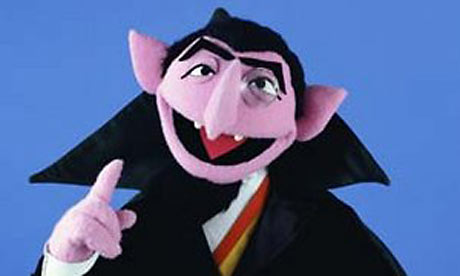
The Count - The Count may be my favorite villain on the show, if only because everything about him is wrong in such a way that it turns the whole character into a complete failure of ideas. He is terrible and I love him for it.

The Count is a loose, LOOSE interpretation of classic Green Arrow baddie Count Vertigo, the monarch of an Eastern-European nation whose motivation ranges from trying to Game-of-Thrones his way to power, to world domination, to helping the U.S. government for kicks. I'm not going to say he's the most well-developed villain in comics, but he does have one thing going for him: his powers. Count Vertigo has the ability to induce vertigo in others, which means the good guys fighting him can't maintain their balance or sense of direction and must therefore find a way to beat him that isn't "punch him in the face". With that, you could make an interesting bad guy that isn't easily overcome, forcing our heroes to think outside the box to stop him. Arrow does nothing with any of that, and the results are hilariously bad. So just what's wrong with the Count? Shall I count the ways?

1) The name. It sounds dumb, and since his real name is never given, it's all anyone ever calls him.
2) The character. The Count of Arrow is a crazy, off-balance (heh) drug manufacturer whose signature product is called Vertigo. The character himself acts like a bargain-basement Joker, a grinning, unpredictable criminal who's just as likely to compliment you as he is to kill you. At least, that's what I think he's supposed to be, but the half-assed writing and bad acting just make him seem like a weirdo that people are inexplicably afraid of. I'm sure Seth Gabel is trying to make this guy interesting, but he just really isn't, at least not for the reasons the writers want him to be.
3) The name. He's called the Count because early test subjects for his drugs were found with two syringe marks in their necks, giving the image that they were bitten by a vampire. Yes, they expect us to take this seriously.
4) The costume. The Count's eccentricity may be better highlighted if he dressed the part. Instead, he's in a long coat and wearing all black, which makes him look less like a threat and more like a contemporary for Gary King from The World's End. The outfit makes him seem like a thirty-year-old goth who happened to have eaten too many pixie-sticks that day. Not intimidating, just weird.
5) THE NAME. I'm sorry, I can't get over this. When I think of a title like "the Count", I don't think of a drug dealer who looks like David Tennant's lame cousin, I think of this guy:
When Oliver goes to meet him, I half expected the guy to say, "I will sell you...three drugs! One, two, three! Three drugs! Ah ah ah ah ah!" I actually wish he did, that'd be hilarious.

So that's my venting for the series Arrow. It's dumb and misguided, but that's not gonna stop me from watching it. Hell, season two opens with Oliver deciding that killing is bad and wrong and aspiring to do good in his city instead of just hunting down the evil 1%, so it seems like our superhero show may actually star a superhero. Plus, the Flash is going to be introduced this season, which should at least be an interesting change of pace since he's going to be an actual super-powered character, something this show hasn't tackled yet. So if you want a below-average action show to pass the time with, you can do worse than Arrow.

Thanks for reading and I'll see you next time!

Saturday, September 28, 2013

Top 5 Superhero Cartoons of Today

Y'know, I think this piece won't get as many views as some of the others because I'm one of the few people I know who puts this much thought into this sort of thing. And to that I say: Whatever. I write this blog for me more than anyone else. Anyway...

We live in a Golden Age of superhero media, where fans and comic writers are running the adaptations of their favorite medias. Of course, writing isn't a surefire process, and some shows will inevitably be better than others. I'm here to tell you which one goes where. Here's the Top 5 Superhero Cartoons of Today (I'm not doing "of all time" because you don't need another nerd on the internet telling you Batman: The Animated Series was awesome). Enjoy:


5) Teen Titans Go!

TIME FOR HISTORY!!!

From 2003-06, Cartoon Network broadcast Teen Titans, a cartoon which, by all accounts, should not have lasted the five seasons it did. It was an adaptation of a team who hadn't been popular in comics for over a decade, with characters who (aside from Robin the Boy Wonder) hadn't made a splash outside the geek community, in a distinctly anime-esque style at a time when Bruce Timm's all-American aesthetic was dominating TV with Justice League. And yet, against all odds, it worked. Thanks to some great character writing and acting, a diverse pantheon of villains, decent comedy, and just all-around fun, Teen Titans turned Starfire, Raven, Cyborg, and Beast Boy into characters that every kid worth their cartoon cred knew. The show was taken off the air in 2006, despite the fact that producer Glen Murakami had plans for a sixth season, but lived on in the hearts of its loyal fans.

Our story continues in 2012, when Cartoon Network began airing DC Nation Shorts, a series of animated shorts starring lesser-known DC characters or reinterpretations of more famous heroes. These included the return of the Teen Titans to television, in sixty-second comedy bits airing between commercial breaks, and you know what? They were pretty decent. No, they weren't the funniest thing on TV, but I got a laugh out of them and it was nice to hear the old cast doing the voices again. The shorts did, however, prove popular enough to greenlight Teen Titans Go!, a funnier, more lighthearted interpretation of the characters, playing up the comedy that was already in the old show.

I was actually sorta jazzed about TTG. The old cast was back, the animation looked decent, and there was the fact that there was potential for comedy. The Teen Titans are set-up like a family, so there's grounds for a sitcom-style presentation of the characters, plus there's humor to be wrung out of the fact that being superheroes is basically their day job and nobody in Jump City seems to give a damn about them. The stars seemed to be aligning. The only thing TTG needed to do was be funny and it'd be golden.

...

*cough*

...


Yeeeeeeeeeeeeah, that didn't end up happening.

Teen Titans Go! subscribes to the theory of comedy that if you yell funny words a lot with little or no context, you will get laughs every time. What's worse is the fact that the character writing that made the original series so memorable is all but gone, leaving our protagonists as either contemptible or forgetful. Robin, once the driven and noble leader, is now alternatively a workaholic, a creepy hormonal teenager, an insecure douche, a petty whiner, or anything else the script needs him to be. Beast Boy, once the team's joker who would step up and get serious when needed, is now a lazy, responsibility-dodging slacker, making me question why he still elects to be part of the team. Cyborg, once a hardworking teammate whose energy and bravado covered up his insecurities about being more machine than man, now seemingly has two modes of behavior: speaking at a reasonable volume, and not doing that. Starfire, once the sweet and innocent girl who was still had much to learn about Earth culture but was fiercely loyal to her friends regardless of their differences, is relatively unchanged; the series just seems to have no interest in doing anything with her except say funny-sounding alien words.

The only character whose transitioned seamlessly and is still funny (far and away the funniest character on the show) is Raven, who is delegated to the role of straight-man, acting as a voice of reason in a world that otherwise seems completely insane. This is compounded by the fact that Raven has absolutely zero fucks to give about anything going on around her, and her detachment from the rest of the world usually gets a laugh out of me.

Without being compared to it's fore-bearer, TTG may have just been an unfunny comedy, bad enough on its own, but standing alongside Teen Titans, it's a confusing, disheartening mess of a show.


4) Avengers Assemble

With the film version of the Avengers making all of the money in the world, you can bet your ass Marvel made a cartoon about them, even going so far as to use the film's roster as the stars (plus the Falcon, adding a necessary element of diversity to a lineup whose only person of color is green). In addition, it has the same or similar continuity to other Marvel shows like Ultimate Spider-Man and Hulk and the Agents of S.M.A.S.H. So why isn't it as good as them?

Let's start at the start: after an unseen period of time when the Avengers broke up (subtly attributed to Tony Stark being a dick), Captain America, Thor, Iron Man, Hawkeye, Black Widow, and Falcon join forces to fight the Red Skull and his ever-growing Cabal of one-note supervillains, while also trying to live together under the same roof and tolerate each others' explosive personalities.

Assemble's major flaw is simple: it's a poorly written show. The pacing of each episode is off, devoting more time to the fight scenes than to the witty banter that is neither witty nor advances the characters beyond their single, most recognizable characteristic: Iron Man is an asshole, Hawkeye is snarky, Falcon is a newbie, etc. The most annoying of these is the treatment of Hulk, who is essentially there to punch things and yell the word "SMASH!" at least once per episode, which wears thin pretty quickly.

In addition, the shows fails the Bechdel Test harder than anything I've ever seen. For the uninitiated, the Bechdel test for representation of women in media was created by Liz Wallace and popularized by her friend, cartoonist Allison Bechdel, and is as follows: a film passes the Bechdel test if it a, features more than one named female character; b, has these two (or more) female characters have a conversation with each other; and c, has the subject of their conversation not be a man. Assemble doesn't even get past stage one, with the only female character being Black Widow, and she doesn't even show up for about half the episodes. This may be for the best, however, since her character is STUNNINGLY BORING.

There are some bright spots, of course. The animation is nice and the choice of villains is at least diverse, even if most of them are shallow and underwritten. And of our protagonists, the consistently best of them is Captain America, whose old-school morality and complete nonchalance towards the strangeness of 21st-century life are both likeable and actually funny some of the time. However, it's not enough to save this underwritten, overexcited, mess of a superhero show.


3) Ultimate Spider-Man

I had some degree of difficulty deciding which was better between this and Avengers Assemble. In the end, USM won out by sheer factor of having more ambition than "let's put Joss Whedon's Avengers in a cartoon". Unfortunately, the harder you try, the harder you fall, and Ultimate Spider-Man is nothing if not an ongoing series of small hits and big misses.

The conceit of USM is actually not that bad a starting point: Spider-Man, a.k.a. high school student Peter Parker, is recruited into S.H.I.E.L.D. by Director Nick Fury (following through on the promise made in the Ultimate Spider-Man comic book that, once Peter turned 18, he'd pretty much become government property). He is equipped with fancy new accessories (available at a store near you) and even given his own team of superheroes, posing as fellow high school students: Iron Fist, Power Man, White Tiger, and Nova. Together, the new Spider-Team fights whatever forces plague New York that the Avengers can't deal with because they don't have their own show yet.

The tone of USM is what turns a lot of people off of it; it is AGGRESSIVELY kid-friendly, with every character a joker or just a joke. Spidey gets the worst of it, as he copes with the strangeness of his life through asides to the audience and exaggerated fantasies that go on long enough to pass the point of "not funny" and cross into the territory of "do shut up now, TV". The show often feels like "Baby's First Family Guy", and not in a good way.

However, while the worst of it is the humor (which makes up a lot of it), there's also stuff to like. The animation and character designs are nice and the side characters actually come across as likeable sometimes. Particular points go to White Tiger and Iron Fist, the designated mature ones of the team - Tiger because of her nature as type-A overachiever, and Fist because of his mellow disposition and his habit of spouting pseudo-profound phrases that the writers presumably copied from a series of fortune cookies. There's also the fact that, unlike The Spectacular Spider-Man (the previous Spider-Man cartoon, which was produced by Sony), USM can have our intrepid teenage heroes fight bad guys from all over the Marvel universe without having to worry about rights. This is, of course, the ONLY quality USM has over Spectacular, as Spectacular was a golden gift from the Lord himself, sent through his vassals Greg Weisman and Brandon Cook, delivered by the CW and OH MY GOD IT WAS SO GOOD WHY WASN'T THERE MORE OF IT WHYYYYYYYYYYY

Sorry, got a little depressed there. Anyway, USM has faults...many, many faults...but it's more bearable than Assemble and at least it does a better job introducing kids to the Marvel universe. But it's still not that good of a cartoon, and definitely isn't Spectacular.


2) Hulk and the Agents of S.M.A.S.H.

Well this took me off guard.

As I mentioned above, I rather disliked the presentation of the Hulk in USM and Assemble. The moral complexity of the character was gone, as was (and still is) any mention of Bruce Banner, and instead we got the "fun" Hulk, who acts like a nine-foot-tall second-grader. He was grating, he was dull, and he got his own spin-off. And against all odds, it works. Mostly.

In the show, the Hulk has apparently relocated from Manhattan, center of all supervillain activity in the world, to Vista Verde, Nevada, in a super-secret base with a jet. Where'd he get this super-secret base and jet? Who cares! Maybe he got them from a toy store near you. Anyway, Hulk is joined by his best/only friend and number one fan, Rick Jones, who has been blogging and vlogging about the Hulk to try and prove that he isn't a monster, because that's what the young people do, yo. In the course of the pilot, Rick gets his own gamma powers and becomes A-Bomb, while Hulk recruits other gamma-irradiated heroes to help, including the gung-ho military man Red Hulk, the stable, down-to-Earth pilot She-Hulk, and the savage, simple-in-mind-but-noble-in-heart Skaar. Together, this unlikely group of heroes fight bad guys while also learning lessons about friendship and togetherness. Think of it as "My Little Hulks: Friendship is Smashing".

The thing that makes this series work? What makes it not only bearable, but compelling? The Hulk himself. Gone is the big angry stupid troll who compulsively tackles his teammates as well as his enemies. Instead, Hulk is...intelligent. He's regretful about his past as a mindless brute, eager to change his image to the public, aware of teammates flaws and wants to fix them, and, in a shocking but welcome addition, still loves being a superhero. THIS is what Marvel does best: balance the compelling character drama with the excitement and fun of fighting bad guys. It really is Hulk, the writers, and voice actor Fred Tatasciore (who's been voicing the Hulk since 2006 and whose last name is pronounced "Tah-tah-shorr") who brings this show home.

The supporting characters are also well cast and enjoyable. Eliza Dushku makes She-Hulk grounded but fun and engaging; Clancy Brown as Red Hulk is...guys, it's Clancy Brown, he can do no wrong; and Seth Green is perfect as the excitable fanboy Rick Jones, bringing with him the ability to make even the dumbest line sound charming.

It's not perfect, of course. The villains are still one note, the jokes are still aimed at five-year-olds, and most of the supporting characters aren't given much to do so far, beyond Rick making jokes and Hulk and Red Hulk arguing with each other in the most manly-sounding conversation your ears might ever hear. Still, when you compare it to it's contemporaries, S.M.A.S.H. is a diamond among coals, and even without those, it's a good bit of fun for the kid in all of us.


1) Beware the Batman

Yep. Leave it to Batman to be the best.

Developed by DC Animation veterans Glen Murakami, Sam Register, Butch Lukic, and Mitch Watson, Beware the Batman puts the Caped Crusader back to his roots as an up-and-coming vigilante in Gotham City. The hook of Beware is that rather than give us the familiar cast of supporting characters and villains like Robin, the Joker, the Riddler, etc., it opts to shake up the formula with new characters and even uses some of the old ones in new and interesting ways. For starters, rather than introduce Dick Grayson version one-billion, it gives Batman a new partner: Katana, a.k.a. Tatsu Yamashiro, former CIA agent turned bodyguard to Bruce Wayne turned partner-in-crimefighting. This actually brings a different dynamic to the table, as rather than fight alongside a kid, Batman is teaching and training someone who's an adult, with years of dangerous fieldwork already under her belt. Their partnership is new at this point in the series, but I'm very eager to see it develop.

In addition, we've got new villains to fight. Professor Pyg and Mister Toad, Magpie, Anarky, Doodlebug, Junkyard Dog, and Lady Shiva all make their animated debuts in Beware as Batman's developing rogues gallery. But while it's definitely interesting to see new faces on the board, I can't help but feel that some of them feel like stand-ins for the more familiar faces we've come to expect. No matter how crazy you make her, Magpie's just gonna end up seeming like Catwoman in an even more revealing outfit (seriously, I feel sorry for this girl having to run around at night), while the presentation of Anarky just makes him seem like the Joker cosplaying as Moon Knight. Plus, a lot of these villains come from creepier, more grown-up Batman stories, so seeing someone as entertainingly twisted as Professor Pyg reduced to a well-mannered animal rights activist (rather than a demented surgeon who at one point does a strip-tease in front of a bound and gagged Robin, I am not making this up, it's Grant fucking Morrison we're talking about) just feels off.

Still, Beware has a whole lot going for it. While elements like a more action-oriented Alfred Pennyworth and the strange new CGI animation take some getting used to, once you let them, you really start to like them. Beware isn't the freshest take on the character of Batman himself, but it's a new look into his strange, strange world, and I for one am loving the ride.


Honorable Mention: The Awesomes

No, it's not based on a comic, but I feel The Awesomes deserves a mention here, because I really like it.

After Mr. Awesome, leader of the world's greatest superhero team the Awesomes, announces his retirement, the rest of his team goes their separate ways; all except his son, Professor Doctor Awesome, and his best friend and teammate Muscleman. Together, the two set out to form a new team of Awesomes and keep Prock's dream of being a superhero alive, rounding up the most powerful and least mentally stable heroes they could find in order to save the world, all while the "reformed" supervillain Dr. Malocchio manufactures his latest scheme for world conquest.

Now, I'm someone who not only loves superheroes, but I also love myself a good parody. Rarely do these two things intersect successfully. The greatest of these is, far and away, the short-lived but well-remembered Marvel series Nextwave (or Nextwave: Agents of H.A.T.E. if you wanna be all technical about it). The Awesomes reminds me quite a bit of Nextwave, and while it doesn't reach that book's level of out-there scifi or spot-on send-up of Marvel comics lore, it does aim for the same point Nextwave did: A person can't be involved in the hero/villain game if they are mentally regular. You'd have to be an idiot, or insane, or both, to think that the best way to solve a problem is to put on colorful tights and punch things.

Unlike USM, which too often feels like a comedy that just happens to have superheroes in it, The Awesomes is, at its core, a superhero show that's trying to be funny, and for the most part, it succeeds, thanks to solid character writing and a cast mostly made up of Saturday Night Live veterans like Bill Hader, Kenan Thompson, Taran Killam, and series co-creator Seth Meyers.

The Awesomes is a very pleasant surprise. The first season is currently available at Hulu.com and, if you can stomach the ads for Jack Link's Beef Jerky at the end of every episode (because in the words of Kevin Smith, "Somebody gotta pay fucking the bills around here."), I definitely recommend it.

So that's my list of the best superhero cartoons today. Now I know what you're thinking, because I've secretly got psychic powers: you're wondering why I didn't include other superhero shows of the day like Axe Cop and the new Teenage Mutant Ninja Turtles series. Well don't you worry, I'll get to those soon enough. For now, I'll just say watch them both. Axe Cop is available on Hulu, while TMNT is a bit harder to find because Nickelodeon makes there stuff harder to get find, but it's still good.

Thanks for reading and I'll see you next time!