Tuesday, March 13, 2012

Of Adaptations and Endings

Hello again, readers and friends. As I said in my last post, internet-type guy MovieBob is sort of my inspiration for doing this blog. Since he occasionally does episodes of his popular culture commentary program "The Big Picture" that are composed of smaller ideas that have yet to be stretched out into full episodes (called "The Junk Drawer"), I figured I might as well do the same thing. A few things have caught my geeky sort of fancy in the past week, and I figured I might as well spill my guts here. So here it is, some things that interest me...I should really come up with a better name for this...

John Carter


This past weekend so the release of Disney's John Carter (Disney: The first distributor ever to do summer blockbusters in the Winter!), based on the literally 100-year-old Barsoom series of pulp adventures written by Edgar Rice Burroughs. John Carter of Mars, as the franchise is referred to, is considered the pretext to most of the great works of sci-fi and fantasy in the 20th century, having inspired the likes of Flash Gordon, which inspired Buck Rogers, which inspired Star Wars, which inspired a whole bunch of stuff, and so on. And now that we live in an age of high-budget special effects and brand-name recognition being the key to success, it's only natural that Burroughs's version of the Red Planet become the next great Hollywood blockbuster. And yet...it doesn't look that good.

In its opening weekend, John Carter made $30 million domestic and $70 million internationally, making for a total of $100 million (those high school math classes really paid off, didn't they?). Now, a sane person would be overjoyed at the prospect of making a tenth of that money over three days, but remember, this is Hollywood. John Carter is estimated to have cost $250 million, which means that its impressive opening weekend raked in enough money to pay the special effects guy who made Tars Tarkas have green skin. So why did this movie do so (relatively) bad at the box office?

For starters, the advertising. Omitting any mention of Mars, Barsoom, space, green four-armed people, etc. from the title of the movie buries the lead. A movie called John Carter just sounds...boring. You have a space epic involving alien lizard men, giant ape monsters, and a wicked hot red-skinned lady in skimpy dress (seriously, this movie is worth seeing for Lynn Collins alone. She kills it in the movie and looks jaw-droppingly fantastic while doing it). Show off what you got!

Next comes the fact that there wasn't as much merchandising. Disney shot themselves in the foot when they didn't release all nine books in the Barsoom series together, or any toys to promote the film. This is a part of Hollywood that I know very little about (as opposed to the rest of the film industry, which I clearly have a masters degree in), but doesn't it seem like a kid would get more excited about a John Carter movie if he had a John Carter action figure with kung-fu grip and little plastic swords he can stab himself in the eye with? I sure would be.

Finally, there were the reviews: They weren't positive. Last I checked, Rotten Tomatoes has the movie at 51% approval, or by high school standards, an F. And, admittedly, the film is flawed. The pacing is slow, the mythology is mostly dull, the Thark race is the most interesting part of the movie and they're mostly a B-Story, the villains range from boring to confusing, and Taylor Kitsch is only servicable as an action hero. However, I still had a lot of fun with it. The action works, the visuals are awesome, there's genuine comedy in it, and, again, Lynn Collins kills it as Dejah Thoris. I'm asking you to please, PLEASE see this movie; if it gets a sequel, it'd probably be a lot better.

The Lorax


Beating John Carter at the box office was The Lorax, Illumination Entertainment's adaptation of Dr. Seuss's 1971 children's book. This film has captured my interest without me having to see it because of the baggage it brings as an adaptation.

See, based solely on speculation, my generation seemes to be much more nostalgic than the previous ones. I think it's because our nostalgia is more rooted in the media we absorbed as children, and how entertainment in the late 80's/early 90's was more specialized than it was at other times and children's entertainment in particular was more distinct and varied. That's why it interests me whenever people dig up relics of their nostalgia and point out the more intellectual aspects of it that they can see now that they're adults. Dr. Seuss's books a prime example of this because they're, to a degree, universal and because a lot of them do have bigger ideas at work. "The Sneetches" was about antisemitism. "Yertle the Turtle" was about Nazi Germany. "How the Grinch Stole Christmas" was a reinterpretation of the Germanic epic poem Beowulf, told from the perspective of its initial villain, the monster Grendel. Likewise, "The Lorax" was blantantly about environmentalism.

A lot of the reviews I'm seeing for the Lorax movie is that it's broad message gets lost or is undercut. The book was a bleak cautionary tale about the dangers of overconsumption and short-sighted business practices; it's pretty much an anti-corporate message. The movie tries the same thing, despite the fact that it has 70 corporate tie-ins, including an SUV. Furthermore, it apparently changes the antagonistic Once-Ler's character from an opportunistic businessman to a wide-eyed innocent led astray by his greedy family. The primary antagonist of the film becomes corporate head Aloysius O'Hare, a man so cartoonishly evil, he's one business venture away from making enemies with Captain Planet and the Planeteers.

The reason The Lorax movie fascinates me is because when I first saw the trailer (because my ADD-rattled brain doesn't recognize a movie as existing until it's being pitched to me), I wondered if Hollywood could take a book so renowned for its style and its message, stretch it into ninety minutes, and keep the style and message in tact. In short: No, apparently they couldn't. But, I probably shouldn't say, as I haven't actually seen the damn thing. Maybe I'll catch a matinee sometime this week, because god knows I'm not paying a full ten bucks for this crap.

Mass Effect 3


A week ago saw the release of Mass Effect 3, the conclusion to Bioware's video game trilogy. The Mass Effect games have been highly praised for their storytelling and characterization, and that's on full display in the third game. However, the ending of the game and series has gotten a lot of people angry, and I guess I can see where they're coming from, but I really don't have a problem with it, and I'll tell you why. Incidentally, I'm going to be absolutely spoiling the ending, so be warned.

Set in the distance 26th century, Mass Effect follows the exploits of intergalactic soldier Commander Shepard, and his ongoing attmept to prepare for the coming of the Reapers, a race of ancient machines who wipe out nearly all organic life in the universe every 50,000 years. Mass Effect 3 begins with the Reapers landing on Earth and taking over, driving Shepard and his allies off and forcing them to forge new alliances across the galaxy and build an army to take on the Reapers, while simultaneous ensuring the creation of "The Crucible", a weapon that is capable of destroying every Reaper across the universe.

The final hours of the game are Shepard's assault on Earth, as he fights of Reaper ground troops and makes his way to the catalyst that will ensure the Crucible's functionality. When he gets there, after friends and enemies have died and he himself has been gravely injured, Shepherd is confronted by the Crucible itself, an AI that explains the Reaper's goals and origins and explains how Shepard can defeat them.

What Shepard does is decided by choices the player makes not only throughout the game, but throughtout the previous two games. One of the impressive things about the Mass Effect series is that players can import their saves from old one into new ones; i.e. the Commander Shepard a player created and made choices with in Mass Effect 1 can carry on to Mass Effect 2 and 3, which changes the events of each game based on the previous ones. Yet with the ending of Mass Effect 3, the three different methods of defeating the Reapers all have essentially the same results: Shepard dies, the Reapers stop attacking Earth, the mass relays (the technology through which intergalactic travel is made possible) are destroyed and Shepard's allies survive, albeit having crashed and stranded on an alien world. Many gamers have taken the endings as Bioware saying, "Hey, remember when we said your choices in the previous games had weight and meaning in the series? Well forget that! We're too lazy to think of different endings, so here's this one played again three times!"

The gaming community has not taken this well. Polls and petitions have gone up across the internet, asking Bioware to release downloadable content that will change the ending of the game, providing more diversity and closure to this epic narrative. To an extent, I get what they're saying; something as big as Mass Effect deserves a conclusion that feels like the culmination of three games worth of space travel, grand heroes, larger-than-life villains, love, loss and intergalactic adventure. But really, I don't mind the ending, mostly because of my personal experience with it.

See, before the assault on Earth, I assumed that it was possible for Shepard to fail his mission and for the Reapers to continue their mass extinction without anything to stop them. This means that during the final mission, every time someone said something about the allied forces losing, my heart seized up, and I worried that a galaxy of sentient life was about to go down the toilet because I screwed up. So when I got to the end and Shepard sacrificed himself to destroy the Reapers, I was relieved. I was happy in my success and cautiously optimistic that my allies did survive. And really, I was just happy with the story. To dust off an old quote, "It's not the destination, it's the journey". Everything building up to that final moment on the Crucible was an emotional roller coaster and a fantastic story. Mass Effect 3 is an excellent game, regardless of the ending, and that's all there is to it.


Whew. That was longer than I expected. Still, fun. If you have any thoughts on those things I talked about, send 'em my way. If you have any ideas on what I should talk about, do the same. I'll see you next time.

Monday, February 27, 2012

Why You Love Comics


Hello my friends. So recently, web-based person Film Critic Hulk posted a detailed and somewhat inspiring list called "Why You Love Movies" (see here: http://badassdigest.com/2012/02/05/why-you-love-movies/). Film critic, pop culture afficionado, and all-around inspiration for this blog Bob Chipman posted his own version, "Why You Love Video Games" (see here: http://gameoverthinker.blogspot.com/2012/02/episode-66-why-do-you-love-video-games.html?spref=tw). I have some free time, so I figured, why not post my own about the medium I so love to follow, comic books. So, without further ado and for shits and and giggles, here's Why You Love Comics:

Because we read Spider-Man for Peter Parker.

Because Wolverine is a Canadian samurai.

Because the X-Men are secretly about everything.

Because Earth has four Green Lanterns (five if you count Alan Scott).

Because the Martian Manhunter is stronger than Superman and doesn't need to show it.

Because we know that Aquaman is a badass.

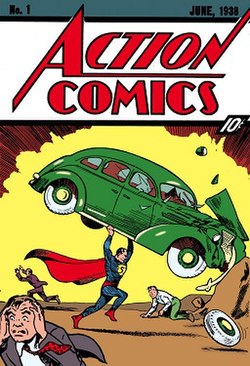
Because two Jews wrote a story about an alien jumping across the Atlantic and stopping World War II.

Because the cover of Captain America #1 is a man wearing the American flag and punching Hitler in the jaw.

Because of the Golden Age and all the Nazi fighting.

Because of the Silver Age and all the Commie fighting.

Because of the Modern Age and all of the Terrorist fighting.

Because Booster Gold's storyline in '52' taught me to do what's right regardless of the recognition.

Because Black Adam's storyline in '52' ended with him killing millions of people, and he's still one of the most compelling villains in the medium.

Because Will Magnus's storyline in '52' is the funniest story you could get about a bipolar super-scientist while still having a heart.

Because of '52' in general.

Because of Gotham City.

Because of Metropolis.

Because of Coast City.

Because of Star City.

Because of Opal City.

Because of Utopia Island.

Because of the Savage Land.

Because of Oa.

Because of Krypton, old and new.

Because every hero and villain in Marvel comics works out of New York and nobody bats an eye.

esuaceB annataZ nac od gnihtyna tsuj yb gniyas ti sdrawkcab.

Because in a world of robot suits, magic spells, mutant powers and monster men, a bow and arrow is considered legitimate.

Because there are multiple Earths.

Because of Crisis on Infinite Earths.

Because of The Dark Knight Returns.

Because of Blackest Night.

Because of Secret Invasion.

Because of Watchmen.

Because the last scene in Scalped #55 was five years in the making and absolutely delivered.

Because in Scott Pilgrim, the hero doesn't just get the girl, he becomes worthy of her.

Because of the background jokes in Chew.

Because of the moment when Peter Panzerfaust stands in the window.

Because Spider-Man was about hitting puberty.

Because the Hulk was about the atomic age and child abuse.

Because Iron Man was an alcoholic.

Because the Green Arrow's sidekick was a heroin addict, and then a single father.

Because of Jerry Siegel, Joe Shuster, Bob Kane, Bill Finger, William Moulton Marston, Will Eisner, Joe Simon, Jack Kirby, Stan Lee, John Romita Sr., Alan Moore, Chuck Dixon, Joe Kelly, Brian Michael Bendis, Kurt Busiek, J. Michael Strazynski, Mark Waid, Geoff Johns, Greg Rucka, Grant Morrison, Ed Brubaker, Matt Fraction, Brian K. Vaughn, Chris Claremont, Len Wein, Dave Cockrum, Brian Azzarello, Mark Millar, Jason Aaron, Jeff Lemire, Scott Snyder, John Layman, Marv Wolfman, George Perez, Abenett and Lanning, Palmiotti and Grey, Paul Cornell, Jonathan Hickman, Judd Winick, Gail Simone and 80's Frank Miller.

Because of Darwyn Cooke, Amanda Conner, J.H. Williams III, Frances Manapul, Alex Ross, J.G. Jones, Greg Capullo, John Romita Jr., Ivan Reis, Doug Mahnke, Rob Guillory, Daniel Acuna, Jerome Opena, Dale Eaglesham, Jock, Moritat, Nikola Scott, Mike Deodato Jr., Frank Quitely (quite frankly), Chris Bachalo, Nick Bradshaw, R.M Guera, Davide Furno, Bryan Lee O'Malley, Gabriel Hardman, Peter Krause, Stephano Caselli, Leinil Francis Yu, Travel Foreman, Miguel Sepulveda, Yanick Paquette, Adrian Syaf, and any writers or artists I didn't mention.

Because Dwayne McDuffie tried to make comics more diverse.

Because for a while, DC's best book was about six crazy supervillains who alternated between dending on each other for support and trying to kill each other over moral differences.

Because of the Great Wheel from Secret Warriors.

Because Nick Fury has been in at least two wars and still wants to fight the good fight.

Because of Batman.

Because of Jason Todd's death in Batman.

Because of Supergirl's death in Crisis.

Because of Ant-Man's death in Secret Avengers.

Because of Boy Blue's death in Fables.

Because of the tragic laughter at Crusader's death in Avengers: The Initiative.

Because the convoluted storylines that you had to understand to get Sodam Yat's death in Green Lantern Corps.

Because I wanted to cry at the end of Lost at Sea.

Because I did cry at the end of I Kill Giants.

Because the Spirit teamed up with Batman.

Because the JLA teamed up with the Avengers.

Because of Comic Con.

Because of Scott Pilgrim vs. the World.

Because of Max Landis's short film, The Death and Return of Superman.

Because the last part of Buffy Season 8 was a convoluted mess, but a fantastic story up until then.

Because Joss Whedon wrote the Runaways.

Because the Runaways exist and Marvel doesn't forget it.

Because Nextwave exists and Marvel won't let anyone trivialize it.

Because Image Comics does things that are different.

Because anyone in this medium CAN do things that are different.

Because Detective Comics #27 is probably worth a million dollars.

Because the moment when Norman Osborn killed the Veranke the Skrull Queen is priceless.

Because Final Crisis was a bunch of good ideas being slammed into a space that couldn't accomodate them all.

Because there is nothing to fear but fear itself, which, according to DC, is a giant yellow space bug.

Because Nicolas Cage named himself after a black man in a disco shirt and a silver tiara.

Because the Court of Owls can give me nightmares.

Because no matter what comes off on the page, I know the writers, artists, and editors behind it are enthusiastic and excited to be working in this medium.

Because I know that no matter what happens in this world, there will still be a place where a righteous man with a great mind, good friends, and wonderful toys can overcome any obstacle.

Because of Cardhaus Games and Dreamstrands Comics.

Because every Wednesday, there's another story waiting to be read.

Thanks, and I'll see you next time.

Sunday, February 26, 2012

Do Wizards Believe in God and Even More Questions of Harry Potter


Hello readers! It's been a while, hasn't it? Well, I'm back and I've decided to do another Potter post. Since most of the plotholes I can recall were covered last time, this time around we're doing something a little different. The Wizarding World is a fascinating little place, but I feel like we've only seen a small quarter of it (specifically the corner that exists in London and the English countryside). I'm not gonna say its underdeveloped, but I will say there are a few questions about it that I'd like to see answered:

Do Wizards Believe in God?
In seven books we never really get to see religion play much into the Wizarding World. It's established that Hogwarts students celebrate Christmas and Easter, but does it go beyond that? Is there a church on Hogwarts campus where students can go to Sunday mass if they want to? Is there a wizard religion that everyone converts to once they start practicing magic? Who do they pray to? Well, Merlin, I assume, but would that mean Merlin is like wizard Jesus? Of course, if Wikipedia is to be believed, J.K. Rowling has her own religious curiosities to work through, so maybe there's an answer somewhere in the future.

What's the international wizard community like?
Throught the series, we really only get to see what the wizards of the U.K. do, and it's pretty much what we'd expect: castles, dragons, old white dudes with huge beards, etc. However, the culturally-limited American in me wants to know: What's magic like in the States? Hogwarts School apparently takes students from everywhere in the U.K.; is there just one school in the U.S.A. or are there multiple schools across the country? Do they just take American students or do they also accept wizards from our neighboring countries? And what about the rest of the world? We see very brief second-hand accounts of what the schools are like France and Norway; what about the rest of Europe? Does Africa have academies? Are Asian wizard schools also leading the world in test scores? This is the weird kinda stuff I want to know.

Are there modern wizards?
This is sort of an extension of my last question. The British Wizard Community seems to have erected a wall between themselves and the modern world. Ostensibly, this is to keep themselves secret, but it does mean that the wizards are stuck perpetually in midieval times, both technologically and culturally (i.e. in the Harry Potter universe, there are English children who grow up without knowing who the Beatles, Monty Python, Winston Churchill, Doctor Who, or other famous Brits are) (Although they'd probably know who Alan Moore is, since he is actually a wizard). But does this seperation exist just in Britain or does the modern world seep in and mingle in other places? Are there wizards who get corporate jobs? Do they use magic to get ahead in the Muggle world? Was Steve Jobs a wizard and used his magic to create the iPod? And what about other aspects of modern technology? What about the internet? I know the series takes place in the nineties, but what about today? Are there websites that only wizards can access? Wizard chatrooms and forums? Places where the can exchange spells or potion recipes? Sites with hints on caring for dragons? Forums where they can bitch about the new Weird Sisters album, and how they've totally sold out? If I've learned anything from the countless pieces of genre fiction I watch, it's this: When you blend magic and technology, the possibilities are endless.

What about the minorities?
I'm talking about the magical creatures here. Again, we see House Elves, Centaurs, Giants, and other sentient creatures in the series through the lens of this mideval British culture. Is it any different anywhere else? Was there an Elf Civil Rights Movement long before Hermione started one? Are there places where centaurs aren't ghettoed into a forest but instead live and work in major cities? Are goblin-supremacy groups, proud of their smithing talents and looking to take down wizards as the dominant creatures on Earth? Do people afflicted with lycanthropy attend Werewolves Anonymous, where through group therapy they work through their psychological issues and accept themselves despite their curse? Look, the real world has gone through crazy stuff because people have different skin colors. Imagine the chaos you'd get if you really tried to integrate different species into the same world. And as we all know, chaos is interesting.

I think that's enough for now. I've thoroughly overused the word 'wizard' and I've proven what strange, strange things my mind does with genre fiction. Until next time, my friends, keep asking questions.

Wednesday, February 15, 2012

Once Upon a Time, in Nazi-Occupied France...


You may assume by the title that this entry has something to do with Quentin Tarantino's 2009 release Inglorious Basterds, and while it is one of my favorite movies of all time, it's not our topic for today. No, today's topic is also last week's topic: revisionist fantasy!

Specifically, the newest entry into the genre, Peter Panzerfaust from Image Comics. Written by Kurtis J. Wiebe and drawn by Tyler Jenkins, the book takes the basic ideas and characters of J.M. Barrie's classic fairy tale Peter Pan and transposes them into 1940's era France. Weird idea, yes, but thanks to some good writing, good pacing, and good writing, it works fantastically.

Peter Pan is reimanged as the titular character, an American teenager who drops into Calais, France, as it is being taken by the Nazis. There he happens upon an orphanage and, with a grin on his face and a spring in his step, attempts to lead a group of forlorn male youths (or 'Lost Boys', if you will) to safety from the German Army.

The first issue is very sparce; Panzerfaust's motivation is given in two panels, while characterization for the boys is limited. However, I'm still interested; the nods to Panzerfaust's fairy tale counterpart are clever without being overt, and the art style is tight and kinetic and makes our hero and his compatriots look great.

Not the best review, I know, but this is a very promising start to what I'm sure will be a fun and interesting war story. The series has just started, so now's the time to get in on it, either in print or through digital devices. Go pick it up, and I'll see you next time!

Friday, February 10, 2012

Fractured Fantasy


I'm a guy who goes to a lot of movies and keeps up with movie news, which lets me notice what trends are popular in film. I've seen the parody phase, the penguin phase, and just recently the vampire phase. Stemming from that one is where we're at now: the revisionist fable phase.

2010's Red Riding Hood behind us and this year we've got two (TWO!) remodels of Snow White and the Seven Dwarves, plus a Pinocchio flick in development, "Hansel and Gretel: Witch Hunters", and not one, not two, not four, but THREE (THREE!) variations on The Wizard of Oz coming to us, it's clear that this trend is proving popular. It's pretty easy to see why: revisionist fables take familiar stories (childrens fairy tales, usually done by Disney) and add superficially adult trappings (sex, violence, post-modern sense of humor, etc.), enticing the profitable tween and teen demographics with stories that are seemingly risque but familiar. To put it in simpler terms:

(Disney flick + Sex + Violence) x Taking itself too seriously / Twilight = PROFIT!

And I would be nothing if not someone who can take a trend and throw my own shitty version into the ring. So here they are, my random ideas for revisionist fables. Enjoy!

Pinocchio - The toymaker Gepetto is now in the pocket of a fascist regime, forced to build puppets for their propaganda shows. However, a resistance led by the enigmatic 'Blue Fairy' use the illegal practice of magic to bring one of his puppets to life, the titular Pinocchio, to act as a spy for the resistance. Pinocchio eventually begins to question his father's morality and that of the resistance and must decide for himself where is true loyalty lies.

Cinderella - Abused emotionally by her stepmother and physically by her stepsisters, Cinderella eventually gets a chance at happiness by using satanism and black magic to escape her home and go to the ball held by the royal family where she strikes a relationship with the princess. Yes, Cinderella is now a lesbian. It's edgy!

Sleeping Beauty - Briar Rose has been cursed to eternal slumber, and the only way for her to wake up is for Leonardo Dicaprio to navigate her dreams and break the spell. [Insert tumpet blast here]

Jack and the Beanstalk - After his expedition of the Cloud Kingdoms, theft of the goose that lays the golden eggs, and 'slaying' of the giant, Jack now lives a celebrity lifestyle, the world unaware that he won everything through theft and trickery. However, a contingent of knights recruit Jack to take them back into clouds and exterminate the giants who they believe are preparing to avenge their fallen brother. Also, there's a metaphor for Iraq in it somewhere.

The Three Little Pigs - The pigs are now hot young women and the Big Bad Wolf is an evil but sexy wizard. There's some sex, some magic...I don't know, someone else finish it for me.

The Pied Piper of Hamelin - Thirteen years after the Piper kidnapped and killed the children of Hamelin, the three children who survived because of their disabilities (but they're still sexy teens) take up arms to hunt down the man who almost wiped out their town. In the end the deaf one dies and the blind one hooks up with the gimpy one. Maybe it's a musical too.

Peter Pan - Same story, execpt they're teenagers, the Lost Boys are now girls, there's a whole lot more sex, and Captain Hook's trying to shut down the rec center or something.

And thats all I got for now. If any of those go into production, I'm gonna sue somebody.

Friday, February 3, 2012

Cameramen


Before I start my review of Chronicle, let me say how cool it is to see a film set in Seattle and ACTUALLY FIILMED in Seattle. Normally movies just do one or two sweeping shots of the Space Needle and the rest is filmed in Vancouver, BC. But, having lived up there for most of my life, I can safely say that the shots of Downtown Seattle are authentic. It's nice.

Anyway, Chronicle. It's awesome. Go see it. The less you know about it, the better, meaning stop reading this thing, see the flick, then come back and finish this. It's really, really cool.

Chronicle follows three high school seniors: bullied nerd Andrew, douchey philosopher Matt, and type-A personality Steve. Andrew has decided to put his life on camera, which is convenient, because one night him and the other two stumble upon a...thing (yeah, its not explained) that gives them telekinetic superpowers. After some experimentation, the trio decide to use their newfound abilities for the greater good and fight crime in their local city.

Wait, no, thats an entirely different kind of film. The trio decide to use their abilities to fuck around in Seattle.

Based on that description, you might assume the main characters are lameass frat boy knockoffs that you'd find getting hit in the nuts on YouTube. However, Andrew, Matt, and Steve come off as likeable and genuinely nice guys. The joke around with each other but you don't really feel any genuine malice between them, even when things get rough.

Oh by the way, things get rough. Like, batshit insane rough. The third act is balls-to-the-wall crazy but in a fantastic way. In fact, throughout the whole movie, we see clever and interesting ways of the trio using their powers. Normally, with telekinesis on film, it's an excuse for filmmakers to demonstrate superpowers without needing high budget effects; characters don't have to shoot lasers or fire or anything, just attatch a wire to something, fling it, and fix it in post. And yet Chronicle still uses CGI to get the more elaborate stunts done. It doesn't look the best, but we're more impressed with the characters than with the technology.

Its actually really fitting that it's set in Seattle; the 206 was the home of the first in the 21st Century's real-life superhero movements (Phoenix Jones, a.k.a. Ben Foder). Chronicle feels like both an extension and an inversion of the idea set up in films like Kick-Ass or Super: rather than people deciding to fight with no powers, here people get powers and decide not to fight with them. The trio use their abilities for personal gain without being particularly violent. It's wish fulfilment, and it works.

More than anything, however, Chronicle shows that a good film can be made, marketed, and released without plugging big name stars, directors, or writers. Joe Trank and Max Landis have put together a great 'ordinary meets extraordinary' flick, and I'd love to see what they do next, particularly if this, their initial outing, blossoms into a franchise. Once again, go see this flick, and I'll see you next time.

Wednesday, February 1, 2012

Hurm


Shaunette's Journal, February 1st 2011

Woke to find a DC Comics announced prequel event to Watchmen. Consists of seven miniseries about different characters from the book. Fanboys are enraged. Must get my two cents out there. After all, my opinion does matter.


Yeah, so today DC unveiled "Before Watchmen", a prequel event consisting of seven miniseries expanding on the cast from Alan Moore and Dave Gibbons's original book. Watchmen holds a special place in the heart of many a fan as the book that proved not only that superheroes can be adult in story and subject matter, but that comics in general can be a viable medium for storytelling, even stories about guys in tights beating people up in the night. It's widely regarded as the greatest graphic novel ever written, so when it's announced that the people who own the rights to the book are going to give it spinoffs without the consent or involvement of the original creators, you better expect a lot of flack.

Personally, I feel a bit...'meh' on the whole thing. It looks decent and they'll probably tell some good stories, plus Darwyn Cooke doing artwork is never a bad thing. I probably won't buy it because of money reasons, but it doesn't look that bad. However, many a fanboy is enraged by this very notion, so I figured I might as well address a few complaints. I doubt it'll help, but it might inform you, dear reader, and at the end of the day, that's what this blog is for.

Gah! DC's going back to the well! There aren't any new ideas in comics!
If you truly believe there aren't any new ideas in this medium, do kindly punch yourself in the face. Hopefully this will knock the ignorance out so the knowledge can come in.

While its true the big two of comics (Marvel and DC) rely on their stable of characters to sell books, saying there are absolutely NO new ideas in comics is fundamentally wrong. Smaller companies like Vertigo, Top Cow, BOOM! Studios, Image Comics, Oni Press, and more are putting out new, different content every week. Webcomics are a vast source of new ideas and new stories. Hell, Bluewater Comics puts out some of the shittiest books on the market, but a lot of them are new and different. Broaden your horizons, read something that looks interesting and different, and don't say stupid things.

DC's only trying to make money! They don't care about Watchmen at all!
Well, at least the first part is true. DC is trying to make money. Then again, they're a business, it'd be weird if they weren't trying to make money.

However, the second part strikes me as odd. People who make comics are people who are fans of comics, and since Watchmen is so well known and well regarded, it's a safe bet that most of the people WORKING AT THE COMPANY THAT MADE THE BOOK know it and like it. Furthermore, if DC didn't care about Watchmen, then they wouldn't put top-tier creators like Brian Azzarello, J.G. Jones, Andy and Joe Kubert, Len Wein, and especially the magnificent Darwyn Cooke into this endeavor. Look at that Night Owl cover at the top of the page! It's Cooke-tastic!

Any continuation of the story will ruin the original!
Okay, this is something that always confuses me. If the original work is held in such high esteem, then why would a sequel/prequel/remake/adaptaion ruin it? Any art, regardless of its source material or influences, should be judged on its own merits, not in comparison to what came before it. This is a sin I'm sure we're all guilty of; I, for one, spent the better part of the film "The Last Airbender" comparing it to its far superior cartoon counterpart. Yet stepping back, I can say that on their own merits, the two are different pieces of work that succeed or fail without needing to be compared to one another.

If Watchmen is so important to you, then it won't lose any of that importance when these prequels come out. And if it does, well then maybe it wasn't as good as you thought it was.

DC's just trying to monetize Watchmen!
Yep. Get with the times, man. Once the movie came out three years ago, all bets were off. The floodgates opened to a wave of merchandising and tie-ins, and DC is looking to keep that wave rolling. Again, they're a business. This is what they do.

Look, this may sound cynical or even apathetic, but in my mind, Watchmen is fantastic book that has stood the test of time and remains to this day one of, if not the best graphic novels ever. A prequel won't bring it down, especially not when there's clearly talent and passion behind it. Will these books be as good as Moore and Gibbons's original masterpiece? I sincerely doubt it. Will they be entertaining stories about characters we're familiar with and like? Could be. Will they look good? Again, see above. Cooke-tastic.

And so, because I fancy myself an entertainer as well as teacher, I'll leave you with a joke: This cover to the Dr. Manhatten book that simply reads "Get a room".


See ya next time, and keep watching those watchmen.